7 Biggest Modular Home Mistakes First-Time Buyers Make
Table of Contents
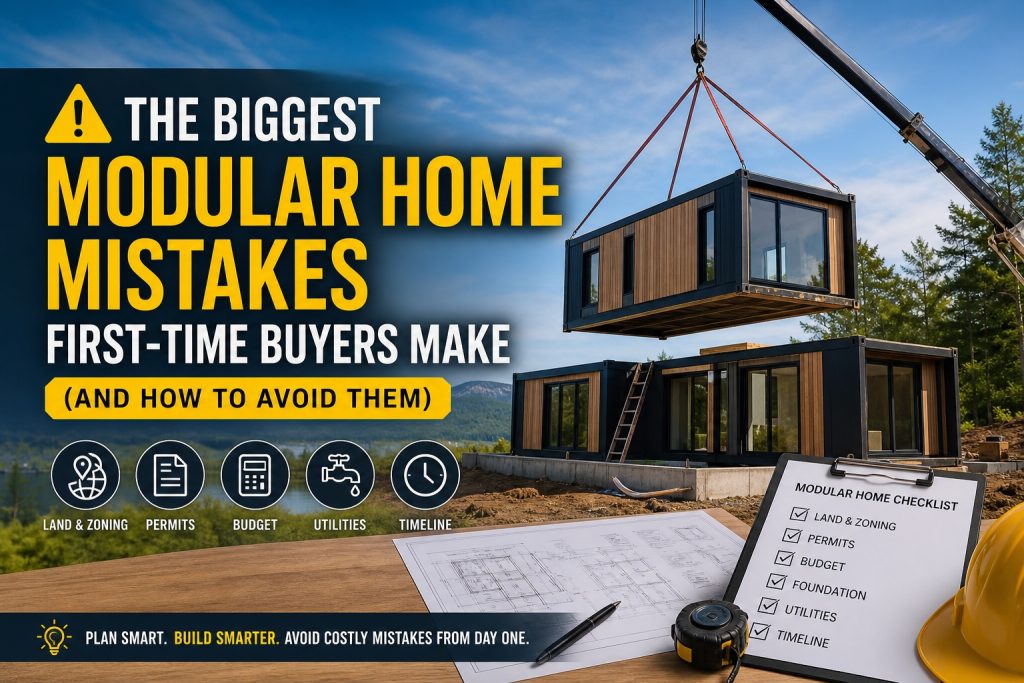
Buying a modular home is often presented as the smarter, simpler alternative to traditional construction. And in many ways, that is true: faster timelines, more controlled costs, and modern design make modular living an attractive option across Europe. But first-time buyers still make modular home mistakes that can turn a promising project into a costly one.
The biggest problems rarely come from the home itself. They usually come from everything around it, the land, permits, utilities, timing, and budgeting. These early decisions shape the entire project, which is why understanding the most common modular home mistakes before you begin can save you thousands of euros and months of avoidable delays.
Buying Land Without Checking What You Can Build
For many buyers, the journey starts with land. It feels like progress, but this is also where one of the most expensive modular home mistakes happens.
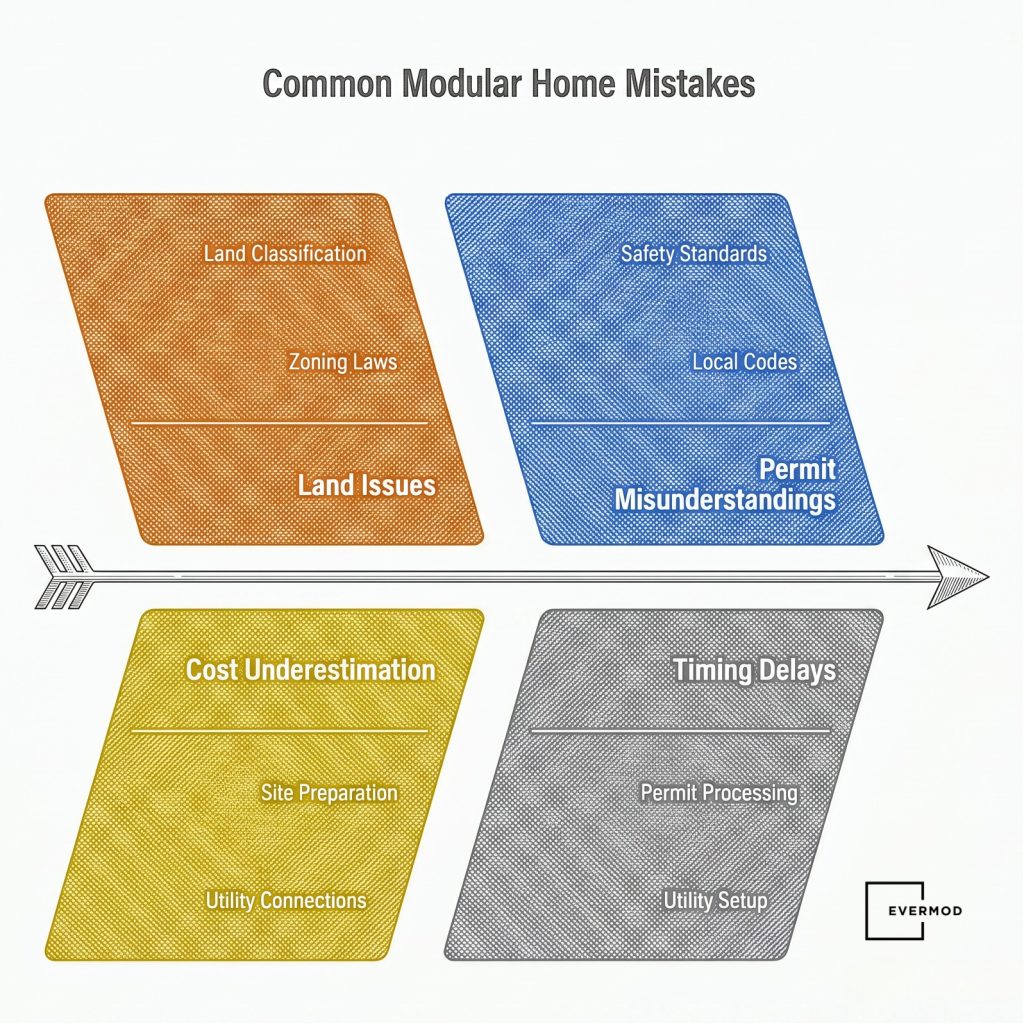
A plot may look ideal on paper and still be completely unsuitable for your build. Local zoning laws, land classifications, setback rules, and building restrictions vary across Europe, and they often matter more than the appearance of the land itself. Even when broader European energy and building policies influence the market, local municipalities still decide what is actually allowed.
Some buyers discover too late that the land is classified for agricultural use. Others realize the plot cannot support the home size or layout they want. In some cases, the home must be redesigned to fit local restrictions, which adds cost and delays.
Before buying land, always confirm what can legally be built there. If you are still searching, Evermod’s guide on is it the right time to buy land for your modular home in Europe is a useful place to start.
Underestimating the Real Cost
One of the main advantages of modular homes is price clarity. The home itself usually comes with a defined cost, which makes budgeting feel much easier than with a traditional build. But focusing only on the base price is another common modular home mistake.
The full project includes more than the unit. Site preparation, foundations, utility connections, permits, transport, and installation can all affect the final number. Because these costs depend heavily on the land and local conditions, the same modular home can end up with very different total prices in different places.
According to the Modular Building Institute, modular construction can reduce waste and shorten build times, but site-related costs remain one of the biggest variables in any project. That is why the smartest buyers look at the complete budget from the beginning instead of relying on the advertised home price alone.
Thinking Modular Means No Permits
Another common misunderstanding is that modular homes somehow skip the paperwork. Because the house is built in a factory, many first-time buyers assume the legal process must be easier. In reality, this is one of the most misleading modular home mistakes.
A modular home is still a permanent structure. It must meet local building codes, zoning rules, planning requirements, and safety standards. In many European markets, regulations are becoming stricter rather than looser. Organizations such as the European Construction Sector Observatory highlight that European construction is moving toward tighter energy and compliance requirements. That means permits, inspections, and approvals are still part of the process.
The good news is that planning becomes much easier once you understand the sequence. If you want a simple overview of how the process works, Evermod’s beginner guide to planning your modular home explains the steps clearly.
Expecting the Whole Process to Be Fast
Modular construction is fast, but only part of the project is fast. That distinction matters, because one of the most frustrating modular home mistakes is assuming the entire journey will move at production speed.
The home itself may be manufactured in just a few months. But the overall timeline still depends on permits, site preparation, foundation work, delivery logistics, and utility connections. These external steps often determine how long the project actually takes.
In other words, the house may be quick, but the process still requires careful planning. Buyers who understand this early tend to avoid unnecessary stress and unrealistic expectations.
Choosing Price Over Long-Term Value
Price is usually the first thing buyers compare, and that makes sense. But focusing only on the lowest number can create another major modular home mistake.
A cheaper home may use different materials, lower insulation standards, or less durable finishes. It may also affect energy performance, maintenance needs, or long-term comfort. These differences are not always obvious at the beginning, but they matter over time.
A modular home is not just a purchase. It is a long-term asset. Looking beyond the entry price and focusing on quality, efficiency, and durability usually leads to better outcomes in the long run, especially in Europe where sustainability and energy performance are becoming increasingly important.
Delaying Utility Planning
Utility planning is one of the most underestimated parts of the whole process. Electricity, water, sewage, and internet may not feel urgent at the start, but ignoring them is one of the more practical modular home mistakes buyers make.
Without these systems in place, the home cannot function properly. Utility setup often requires coordination with local providers, permits, and physical infrastructure work such as trenching or system installation. If this is left too late, it can delay the entire project even when the house itself is ready. The best approach is to plan utilities from day one. Evermod’s guide on how to prepare utilities before your modular home arrives covers electricity, water, sewage, and internet in more detail.
Waiting Too Long to Start
Many buyers wait for the “perfect” moment to begin. That delay can feel cautious, but it often becomes another hidden cost.
Construction prices change. Regulations evolve. Land availability shifts. What seems like a smart pause can slowly make the project more expensive or more complicated. Waiting is one of those modular home mistakes that does not feel like a mistake at first, but often becomes one later.
The goal is not to rush. The goal is to prepare properly and move forward with clarity instead of hesitation.
Modular Home Mistakes to Avoid Early
The most common modular home mistakes are not dramatic. They are usually small oversights made early in the process — land, permits, budgets, utilities, and timing. But those small oversights can create major delays and unnecessary costs if they are ignored.
A modular home can be a smart, efficient, and rewarding way to build in Europe, but only when the project is planned carefully from the start. The buyers who succeed are usually the ones who understand the process before they commit, not after.
If you want to avoid the most common modular home mistakes, start with the basics: check the land, build the full budget, confirm the permits, and plan the utilities early. That is where a smooth project begins.
At Evermod, we help clients navigate each stage of the journey so they can build with confidence and avoid costly surprises. Because when the process is planned correctly, modular living delivers exactly what it promises — a smarter way to build.
FAQ
- What is the biggest mistake first-time modular home buyers make?
The biggest mistake is usually buying land or starting the process before checking zoning, permits, and utility requirements. These early decisions can affect the entire project.
- Are modular homes cheaper than traditional houses?
Often, yes — but the total cost depends on land, permits, foundations, transport, and installation. The base home price is only part of the real budget.
- Do modular homes still need permits?
Yes. A modular home must still meet local building codes, zoning rules, and planning requirements in the country where it is installed.
- How long does it take to build a modular home?
The home itself can be built quite quickly, but the full process may still take longer because of permits, site preparation, delivery, and utility connections.
- What should I check before buying land for a modular home?
You should confirm zoning, land classification, setback rules, access, and whether the plot can legally support the type of home you want.
- Why is utility planning so important?
Because electricity, water, sewage, and internet all need to be arranged before or during installation. If utilities are delayed, the entire project can slow down.