Can Energy Efficient Modular Homes Protect Europeans From the Next Energy Crisis?
Table of Contents
Europe’s energy crisis may have left the headlines, but for millions of households across the continent, its effects are still very real. Electricity prices remain volatile, heating costs still put pressure on household budgets, and many homeowners are starting to wonder whether traditional housing is really prepared for the future.
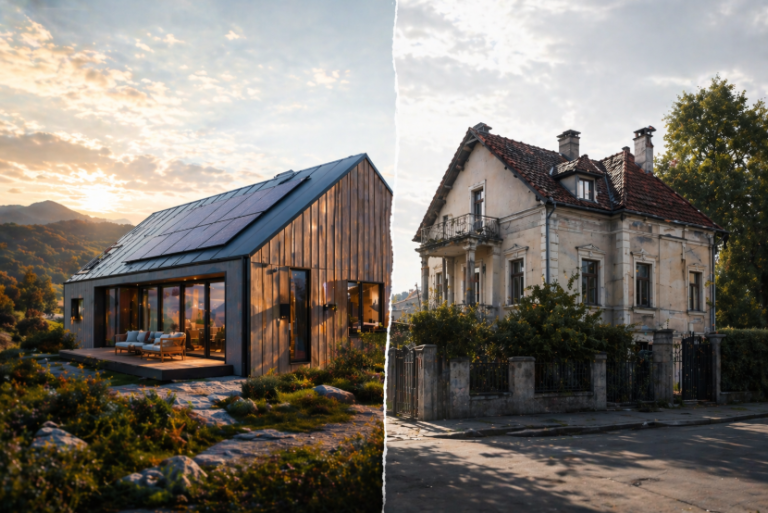
That shift in mindset is one reason energy-efficient modular homes are gaining popularity across Europe. Buyers are no longer looking only at square meters or aesthetics. They increasingly want stability, lower running costs, and homes that can handle a future shaped by higher energy prices and stricter sustainability standards.
This is no longer just about where to live. It is about how resilient your home will be in the next period of uncertainty.
How Europe’s Energy Crisis Changed the Way People Think About Housing
The energy shock that followed recent geopolitical instability has changed how Europeans think about housing costs. Suddenly, energy bills mattered almost as much as mortgage payments. In many countries, homeowners discovered that poorly insulated houses can become extremely expensive to heat when markets are unstable.
This exposed a major weakness in Europe’s aging housing stock. Research on residential energy efficiency in England shows that older homes remain among the least energy-efficient in Europe and still rely heavily on fossil fuels for heating.
The result is that housing is no longer seen only as shelter or an investment. It has also become an energy decision.
At the same time, many buyers began searching for alternatives that could offer more predictable monthly costs and lower exposure to energy inflation. This is where low energy prefab homes and modular construction started attracting much more attention.
The wider housing conversation also ties into Europe’s need for faster and more sustainable housing solutions. We explore that in more detail in our article on how modular construction is helping solve Europe’s housing crisis.
Why Energy Efficient Modular Homes Work Differently
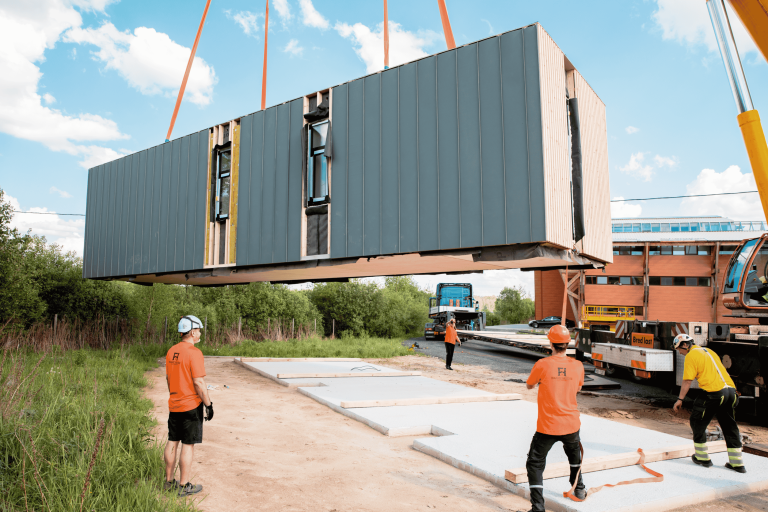
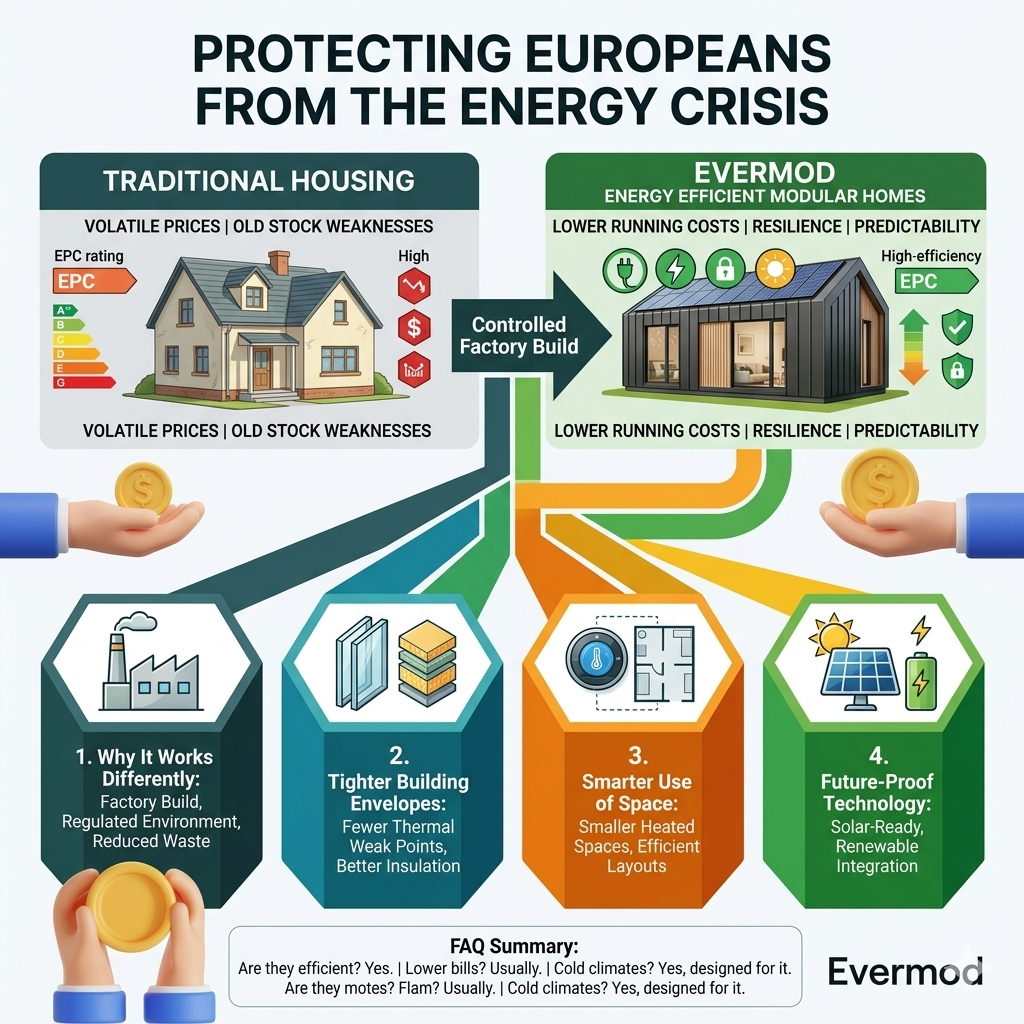
One reason energy efficient modular homes perform so well is the way they are built. Unlike traditional construction, much of the work takes place in a controlled factory environment, where weather delays, moisture exposure, and inconsistent workmanship are reduced.
This precision creates a tighter building envelope, fewer thermal weak points, and more consistent insulation quality. According to Architectural Digest’s overview of modern modular housing, factory-built modular homes are often more energy efficient because materials stay protected during construction, and the assembly process is tightly controlled.
That construction method matters more than ever in today’s energy environment.
A poorly insulated home can waste a lot of money every winter. Heat loss through walls, roofs, windows, and weak structural connections can quietly push annual energy costs far higher than homeowners expect. Some recent analyses suggest that lower building standards in certain markets have added unnecessary energy costs for households.
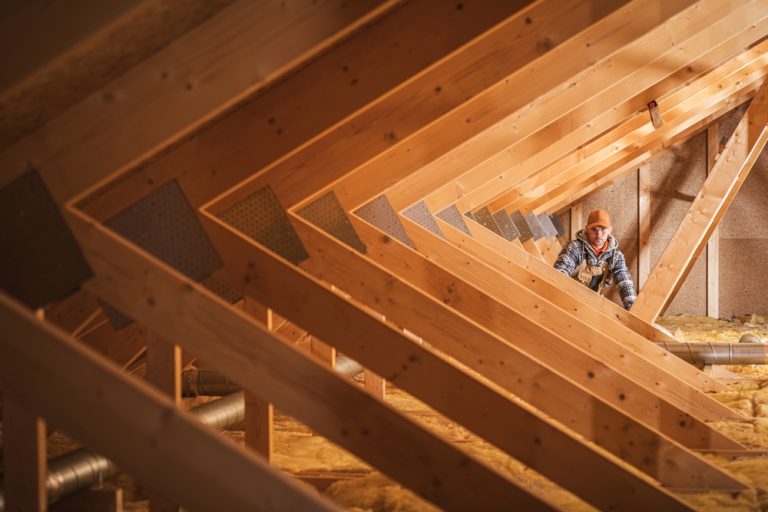
Modern modular home insulation systems are designed specifically to reduce this problem. Triple glazing, advanced wall systems, airtight construction, and heat-efficient layouts all help lower heating demand and improve indoor comfort. We go into this balance between realistic insulation and long-term efficiency in more detail in our article on how much insulation modular homes really need.
Smaller Spaces, Lower Consumption, Better Efficiency
One of the most overlooked advantages of low energy housing in Europe is not just better technology, but smarter use of space.
Traditional homes often have large, underused rooms that still need heating, cooling, and maintenance. By contrast, many modern modular homes are intentionally designed to maximize functionality while reducing unnecessary energy demand.
Smaller heated spaces naturally use less energy. Efficient layouts improve airflow, reduce wasted space, and make it easier to regulate temperature throughout the year. This is one reason why sustainable modular homes in Europe appeal not only to environmentally conscious buyers, but also to people simply looking for calmer and more manageable living costs.
In practice, efficiency is not only about solar panels or heat pumps. It is also about designing homes that make sense for how people actually live today.
Predictable Living Costs Are Becoming a Luxury
For many Europeans, the real stress of the energy crisis was not only the price increases themselves. It was the unpredictability. When utility bills fluctuate dramatically from season to season, financial planning becomes difficult. Even households with stable incomes can feel vulnerable when housing costs suddenly spike.
That is why the conversation around modular home energy costs has become so important.
A well-designed modular home can help reduce that uncertainty with stronger insulation, efficient heating systems, less energy waste, and renewable-ready infrastructure. Buyers increasingly value the ability to estimate and manage future monthly expenses rather than constantly reacting to rising costs. In many ways, predictable operational costs are becoming just as desirable as home ownership itself.
Why Solar-Ready Modular Homes Are Growing in Popularity
Another major trend shaping European housing is the growing demand for energy independence.
More homeowners are investing in solar panels, battery systems, heat pumps, and EV charging infrastructure because they want more control over how their homes use energy. Discussions around residential self-sufficiency have become increasingly common across Europe, especially after periods of electricity market instability. This is where solar-ready modular homes have a natural advantage.
Because modular homes are designed with modern systems in mind from the beginning, integrating renewable technologies is often more straightforward than retrofitting older buildings. Roof structures, electrical planning, and energy systems can all be optimized during the design phase rather than adapted later.
Many passive modular homes are also designed to work efficiently alongside renewable energy systems, reducing dependence on the grid and improving long-term resilience.
That combination of lower energy demand and renewable compatibility is becoming one of the defining features of future-proof modular homes in Europe..
Can Modular Housing Help Reduce Future Energy Costs?
No home is completely immune to rising energy costs, but some homes are simply better prepared than others.
Traditional housing across Europe still includes millions of poorly insulated properties that depend heavily on fossil-fuel heating systems. Retrofitting these buildings can become very expensive over time.
Modern energy efficient prefab homes approach the problem differently from the start. Better insulation, efficient windows, airtight construction, and renewable-ready infrastructure all help reduce ongoing energy use before the homeowner even moves in.
According to recent pricing and performance analyses from companies such as BIOBUILDS’ Passivhaus modular home research and Modular Prefab Homes Europe’s cost overview, energy efficiency and long-term savings are becoming central selling points in the European modular housing market.
The key advantage is not necessarily eliminating energy costs entirely. It is reducing vulnerability to sudden price spikes and long-term cost increases. That distinction matters more than ever in Europe’s current economic climate.
Housing Is Becoming About Resilience, Not Just Ownership
Many Europeans have clearly shifted the way they think about housing.
For years, larger homes and bigger mortgages were often seen as the ultimate goal. But after periods of economic uncertainty, inflation, and volatile utility costs, many buyers are beginning to prioritize resilience instead.
They want homes that are easier to maintain, cheaper to operate, and less exposed to unstable external systems.
This is one reason future-proof modular homes resonate strongly with younger buyers, downsizers, remote workers, and households looking for more flexibility. The appeal is no longer just affordability. It is also peace of mind. A home that stays comfortable during winter without extreme heating costs can feel far more valuable than oversized, unused space.
What Buyers Still Need to Consider
Of course, modular housing is not a shortcut to ignore the basics. Land still needs to be secured. Permits still apply. Utility infrastructure still needs to be planned carefully. The total project cost also includes transport, foundations, installation, and site preparation. These details matter because the success of a modular project depends heavily on good early planning.
However, many buyers find that modular construction still offers more clarity and predictability compared to traditional on-site building, especially regarding timelines and energy performance expectations. The goal is not perfection. The goal is reducing uncertainty wherever possible.
Are Energy Efficient Modular Homes Worth It in 2026?
For many Europeans, the answer is increasingly yes. Not because modular homes solve every housing challenge, but because they fit well with where Europe is heading. Higher energy standards, rising operating costs, sustainability pressures, and changing lifestyle priorities are all pushing buyers toward smarter and more efficient housing models.
Energy efficient modular homes combine many of the qualities modern buyers now prioritize most: lower consumption, renewable compatibility, faster delivery, controlled construction quality, and more predictable monthly living costs. That makes them far more than a construction trend. They are becoming part of a broader shift toward more resilient, adaptable, and financially sustainable living in Europe.
FAQ
- Are modular homes energy efficient?
Yes. Modern modular homes are typically designed with advanced insulation, airtight construction methods, and energy-efficient systems that help reduce heating and cooling demand.
- Can modular homes lower energy bills?
In many cases, yes. Better insulation, efficient layouts, and renewable-ready systems can significantly reduce operational energy costs over time.
- Are modular homes suitable for cold European winters?
Many modular homes are specifically designed for European climates and include insulation systems suitable for both cold winters and hot summers.
- What makes solar-ready modular homes attractive?
Solar-ready modular homes allow homeowners to integrate renewable energy systems more easily, helping reduce dependence on traditional energy sources.
- Why are sustainable modular homes becoming more popular in Europe?
Rising energy prices, stricter environmental standards, and growing demand for predictable living costs are all increasing interest in sustainable modular housing solutions across Europe.