
What the EU’s New Digital Building Passports Mean for Future Homeowners

Table of Contents
Buying a home has always involved a certain amount of trust. It is a stressful process, aren’t we right?
You review the plans, inspect the property, check the energy certificate, and hope that the information available gives you a complete picture of what you’re buying. Yet anyone who has ever purchased an older property knows that important details can sometimes be difficult to uncover. Renovations may have been poorly documented, maintenance records may be incomplete, and key information about materials or building performance can be scattered across multiple documents.
Why Homebuyers Need More Transparency
That is one of the reasons the European Union is working toward a more transparent future for buildings through the concept of the Digital Building Passport.
While the name may sound technical, the idea itself is surprisingly straightforward. Imagine buying a house and having access to its complete history in a single digital record. Everything from construction materials and insulation specifications to renovation history, energy performance, and maintenance records could be available in one place.
In many ways, a Digital Building Passport could do for homes what a full service history does for a used car. If you were choosing between two identical cars, most buyers would naturally prefer the one with detailed maintenance records. It reduces uncertainty, builds confidence, and helps you make a better-informed decision. The EU believes buildings should eventually offer the same level of transparency.
As sustainability standards evolve and digital technologies become increasingly integrated into construction, Digital Building Passports may become one of the most important developments shaping the future of homeownership in Europe.
What Is a Digital Building Passport?
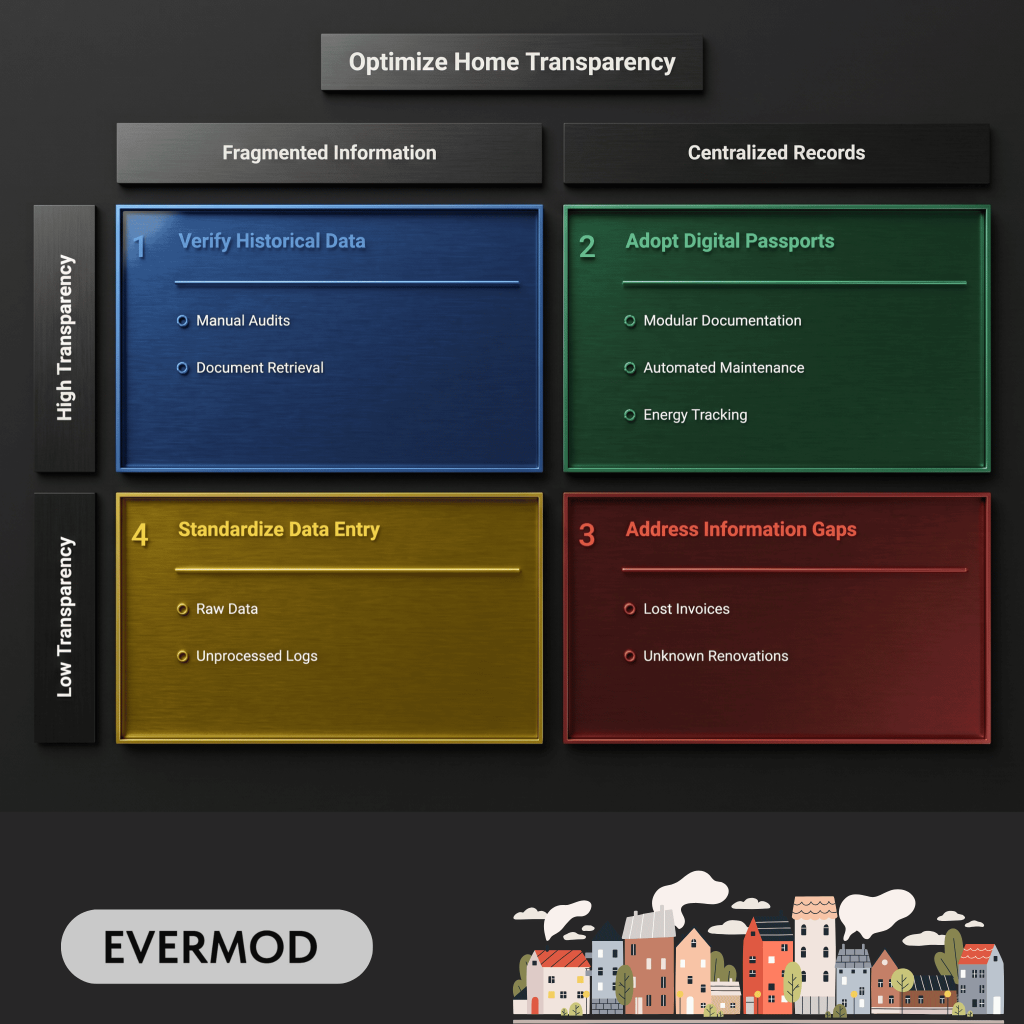
A Digital Building Passport is a digital record that follows a building throughout its lifecycle. Rather than storing information across dozens of certificates, permits, invoices, inspection reports, and technical documents, the goal is to create a centralized source of information that can be updated over time as the property evolves.
The concept is closely linked to the European Commission’s work on Digital Building Logbooks, which aim to improve access to building information and support better decision-making across the housing sector.
For homeowners, this could mean having a clear overview of how their property was built, maintained, and upgraded. For future buyers, it could provide greater confidence and transparency during the purchasing process. As Europe continues modernizing its housing stock, digital building records may become just as important as energy certificates or planning permissions.
Why Is the EU Introducing Digital Building Passports?
Buildings account for a significant share of Europe’s energy consumption and carbon emissions. At the same time, many properties across the continent were constructed long before modern energy standards existed.
To meet long-term sustainability goals, governments need better information about how buildings perform and where improvements can be made.
Digital Building Passports are designed to help bridge that gap. According to the EU-funded Digital Building Logbook framework, centralized building information can improve renovation planning, support energy-efficiency upgrades, and create greater transparency for both homeowners and property professionals.
From Paperwork to Transparency
Traditionally, important building information is often fragmented.
A homeowner may have some invoices stored in a drawer, an architect may hold certain plans, and energy certificates may exist in a separate database altogether. As years pass and ownership changes, valuable information can easily become difficult to access.
A Digital Building Passport aims to solve that problem by creating a living record of the property.Rather than searching through paperwork, future homeowners could access a structured overview of the building’s history, condition, and performance.The result is not simply more data. It is better information that can support smarter decisions.
What Information Could Your Future Home Include?
The practical benefits become much easier to understand when viewed from a homeowner’s perspective.
Imagine purchasing a property and instantly being able to see when the insulation was installed, whether the windows have been upgraded, what materials were used during construction, and how the home’s energy performance has changed over time.
You could review past renovation projects, understand the age of key building systems, and gain valuable insight into future maintenance requirements before making one of the biggest financial decisions of your life. This level of transparency could dramatically reduce uncertainty for buyers.
Instead of relying solely on verbal assurances or incomplete documentation, homeowners may have access to a far more detailed picture of the property they are considering. As sustainability and energy efficiency continue to play a larger role in housing decisions, that information may become increasingly valuable.
How Digital Building Passports Could Change Buying and Selling Property
The housing market has traditionally relied on a combination of inspections, disclosures, and professional assessments. While those tools remain essential, Digital Building Passports could introduce an additional layer of transparency.
Properties with detailed digital records may become more attractive because buyers can better understand exactly what they are purchasing.
The comparison to a vehicle service history is particularly relevant here. A well-documented car often inspires greater confidence than one with missing records. The same principle could apply to homes. A property with a clear digital history may make it easier for buyers to evaluate long-term maintenance requirements, renovation quality, and energy performance.
For sellers, this transparency could also become a significant advantage. Investments in insulation, renewable energy systems, renovations, and efficiency upgrades may be easier to demonstrate and verify. Over time, transparency itself may become a valuable asset.
Why Modular Homes Are Well Positioned for This New Era
One of the most interesting aspects of Digital Building Passports is how naturally they align with modular construction. Unlike many traditional building projects, modular homes are produced through highly controlled manufacturing processes. Materials, components, and technical specifications are often documented from the very beginning, creating a strong foundation for future digital recordkeeping.
As discussed in our guide to building requirements in the EU, European regulations are increasingly focused on performance, compliance, and sustainability. Digital Building Passports represent another step in this broader shift toward smarter and more transparent housing.
For modular homeowners, the transition may feel particularly natural because many of the underlying records already exist.
A home such as the Evermod Barn, for example, is designed around precision manufacturing, energy performance, and long-term durability. These are exactly the types of characteristics that future Digital Building Passports are expected to document and showcase.
The Connection Between Digital Building Passports and AI
Digital Building Passports are only one part of a much larger transformation taking place across the housing industry.
The future home is becoming increasingly connected, intelligent, and data-driven.
In our article on AI home design in Europe, we explore how artificial intelligence may soon help homeowners optimize layouts, predict maintenance needs, improve energy efficiency, and personalize living spaces. Digital Building Passports could provide much of the underlying information that allows these technologies to function effectively.
Imagine an AI-powered home system that understands the age of your insulation, the efficiency of your heating system, the materials used in your walls, and the maintenance history of key components. That level of insight becomes far more achievable when accurate building data is readily available.
Rather than existing separately, these technologies are likely to complement one another. Together, they point toward a future where homes are not only smarter to live in, but smarter to own.
The Future of Homeownership Is Becoming Digital
Digital Building Passports may still be unfamiliar to many homeowners today, but they reflect a broader trend that is reshaping housing across Europe.
Buildings are becoming more transparent. Construction is becoming more data-driven. Homeowners are gaining access to better information than ever before.
The shift is not simply about compliance or regulation. It is about helping people make more informed decisions throughout the entire lifecycle of a home. Whether buying, selling, renovating, financing, or maintaining a property, access to reliable information reduces uncertainty and improves confidence.
Just as vehicle ownership became more transparent through digital records and service histories, homeownership may soon follow the same path. For future homeowners, that could be one of the most valuable upgrades of all.
Frequently Asked Questions About Digital Building Passports
What is a Digital Building Passport?
A Digital Building Passport is a digital record that stores important information about a building, including construction details, energy performance, renovation history, maintenance records, and sustainability data.
Why is the EU introducing Digital Building Passports?
The EU aims to improve transparency, support energy-efficiency goals, and help homeowners, buyers, and policymakers make more informed decisions about buildings throughout their lifecycle.
Will every home in Europe have a Digital Building Passport?
Implementation will vary between countries, but digital building records are expected to play an increasingly important role in Europe’s future housing landscape.
How could Digital Building Passports benefit homeowners?
They can provide easier access to building information, simplify maintenance planning, improve transparency, and potentially increase buyer confidence when selling a property.
Are Digital Building Passports relevant to modular homes?
Yes. Modular homes often generate detailed documentation during the manufacturing process, making them particularly well suited to future digital recordkeeping systems.
Could Digital Building Passports affect property values?
Potentially. Homes with verified records, documented upgrades, and transparent performance data may become more attractive to buyers and investors over time.