Modular Homestead Living: How Barn-Style Modular Homes Are the Secret to Self-Sufficient Living in Europe
Table of Contents
The idea of homesteading has undergone a remarkable transformation in recent years. What was once associated with remote cabins, rugged lifestyles, and complete self-reliance has evolved into something much more appealing for modern Europeans. Today, people are seeking a better balance between comfort, sustainability, and independence. They want to grow some of their own food, spend more time outdoors, reduce their environmental impact, and create a stronger connection with the place they call home.
This shift has given rise to the modern modular homestead. Rather than abandoning contemporary conveniences, homeowners are combining innovative housing solutions with a simpler, more intentional way of living. A modular home allows people to enjoy the benefits of thoughtful design, energy efficiency, and flexible living while building a lifestyle that feels more connected to nature.
For many aspiring homesteaders, the dream is no longer about escaping society. It is about creating a life that feels more meaningful and resilient. A self-sufficient modular home offers an opportunity to do exactly that, blending modern comfort with the freedom to shape your own future.
Why the Modular Homestead Is Becoming a Lifestyle Choice, Not a Survival Strategy
A growing number of Europeans are questioning whether traditional urban living aligns with their long-term goals. Rising housing costs, increasingly busy lifestyles, and a desire for greater wellbeing have encouraged many people to explore alternative ways of living.
Unlike the survival-focused homesteading movements of previous generations, today’s approach is centered on quality of life. People are seeking more space to grow vegetables, spend time with family, pursue creative projects, and enjoy the outdoors. They want homes that support these ambitions without sacrificing comfort or design.
What Modern Homesteaders Are Really Looking For
This is where the concept of a modular homestead becomes particularly attractive. A modular home offers the flexibility to create a personalized living environment while maintaining a lower environmental footprint than many traditional construction methods. Whether located on a rural property, near a small village, or surrounded by open countryside, a modular home can become the foundation for a lifestyle built around simplicity and purpose.
Many people researching how to start a homestead in Europe quickly discover that success is not determined by the size of the property or the amount of land they own. Instead, it comes from creating a sustainable daily routine and choosing a home that supports their goals. A modular home with land provides the freedom to experiment, learn new skills, and gradually build a lifestyle that feels rewarding and authentic.
For those interested in reconnecting with nature while maintaining modern standards of living, Evermod’s guide on how modular homes in Europe bring people back to nature explores why more homeowners are choosing homes that strengthen their connection with the surrounding environment.
Why Modular Homes Are Ideal for Modern Homesteaders
Traditional rural construction projects can often be lengthy, unpredictable, and resource-intensive. Modern homesteaders, however, are looking for solutions that allow them to focus less on the building process and more on creating the lifestyle they envision.
This is one of the reasons why the modular homestead model is gaining popularity throughout Europe. Modular construction provides a streamlined path to homeownership while delivering high levels of quality and precision. Because modules are manufactured in controlled factory environments, construction standards can remain consistent regardless of weather conditions or seasonal challenges.
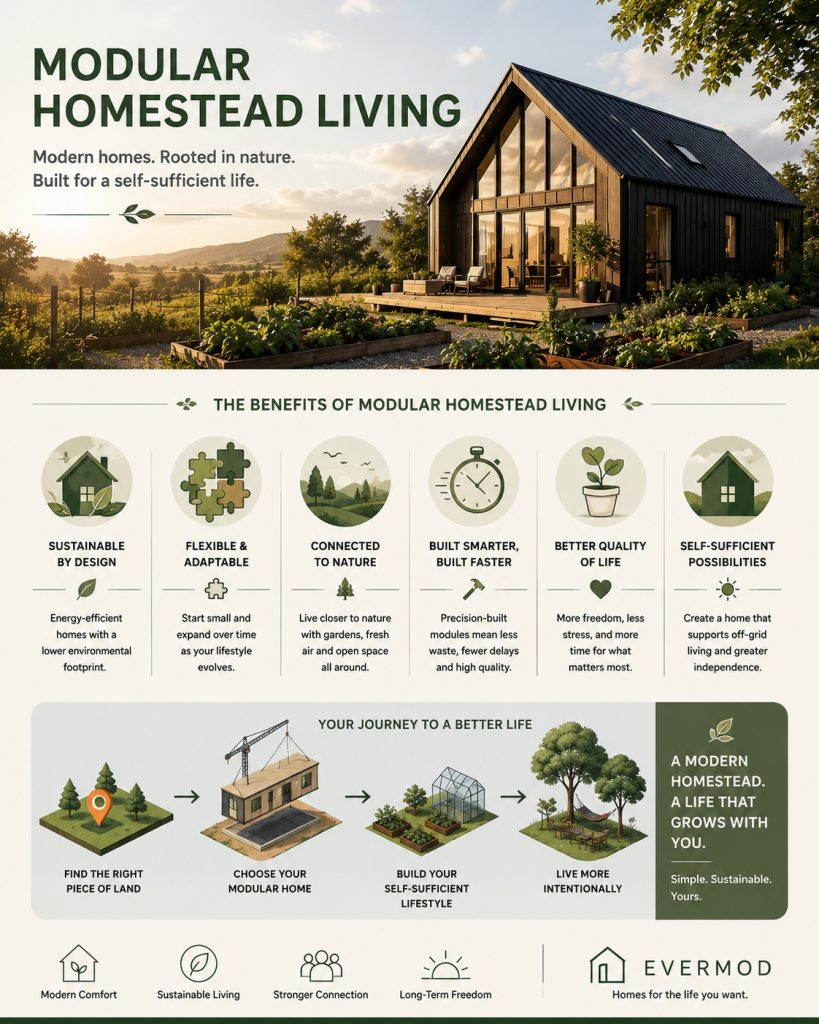
For modern homesteaders, flexibility is equally important. A self-sufficient modular home is not necessarily a finished project from day one. Instead, it can evolve alongside the homeowner’s ambitions. What begins as a comfortable residence can gradually expand into a more comprehensive homestead lifestyle that includes vegetable gardens, orchards, outdoor workspaces, hobby areas, or creative studios.
Another significant advantage is design versatility. Unlike outdated assumptions about prefabricated housing, today’s modular homes offer attractive architecture, contemporary interiors, and layouts that can be tailored to individual needs. This allows homeowners to create spaces that support both productivity and relaxation.
A modular home with land also encourages a different relationship with the surrounding environment. Rather than viewing the home as a separate structure disconnected from nature, many homesteaders see it as part of a larger ecosystem that includes gardens, outdoor gathering spaces, wildlife habitats, and food production areas.
As sustainability becomes increasingly important across Europe, modular construction is also receiving greater attention for its efficient use of materials and reduced waste compared to many conventional building approaches. According to the European Environment Agency, improving resource efficiency and reducing environmental impacts remains one of the key priorities for the future of housing and land development across Europe.
The result is a housing solution that aligns perfectly with the values of modern homesteading: efficiency, adaptability, sustainability, and long-term resilience.
How Evermod’s Barn Model Supports Self-Sufficient Living
Among the many architectural styles available today, the barn-inspired design has emerged as a favorite among people seeking a balance between tradition and modernity. Its timeless appearance, practical layout, and strong connection to rural heritage make it particularly well suited for a modular homestead.
Evermod’s Barn model embraces these qualities while adapting them for contemporary living. Inspired by classic agricultural structures found throughout Europe, the design offers spacious interiors, abundant natural light, and a strong visual connection between indoor and outdoor spaces.
One of the defining features of a barn-style home is its sense of openness. Higher ceilings and thoughtfully designed living areas create an environment that feels welcoming and adaptable. For homesteaders, this flexibility is invaluable. Spaces can serve multiple purposes over time, supporting remote work, creative projects, food preservation, indoor gardening, or family activities.
The Barn model also aligns naturally with the principles of a self-sufficient modular home. Rather than prioritizing excess square footage, the design focuses on functionality and intentional living. Every area serves a purpose, helping homeowners maximize comfort without unnecessary complexity.
How Evermod’s Barn Model Supports Self-Sufficient Living
For those pursuing a more independent lifestyle, the Barn model can also complement the vision of an off-grid modular home. While not every homesteader chooses complete energy independence, many appreciate having a home designed to support sustainable living practices and reduced resource consumption.
Energy efficiency plays an important role in this equation. Homes that require less energy to operate are often better positioned to support long-term sustainability goals. Evermod explores this topic further in its article about energy-efficient modular homes during Europe’s energy challenges, highlighting how thoughtful design can contribute to greater resilience and lower long-term environmental impact.
Ultimately, the Barn model demonstrates that self-sufficient living does not have to come at the expense of comfort, aesthetics, or modern functionality. Instead, it provides a framework for building a home that supports both personal wellbeing and long-term sustainability.
Creating a Modular Homestead That Grows With You
One of the most appealing aspects of modern homesteading is that it does not require perfection from the beginning. In fact, many successful homesteads develop gradually over time.
A modular homestead allows homeowners to start with a solid foundation and expand their lifestyle organically. A small vegetable garden can evolve into a larger food-growing system. A few fruit trees may eventually become a productive orchard. Outdoor spaces can transform into workshops, gathering areas, or places for creative pursuits.
This gradual approach makes the journey more accessible and enjoyable. Rather than feeling overwhelmed by an extensive list of goals, homeowners can focus on one project at a time while continuously improving their property and lifestyle.
Building a Homestead That Works With Nature
A modular home with land is particularly well suited to this process because it provides both flexibility and opportunity. The home itself serves as a stable base while the surrounding property becomes a canvas for experimentation and growth.
Interestingly, many people searching for the best countries in Europe for homesteading are ultimately seeking more than affordable land or favorable regulations. They are searching for freedom, connection, and a slower pace of life. These values can often be cultivated in many different regions when paired with the right home and a clear vision for the future.
For readers exploring potential opportunities, Evermod’s article on whether 2026 is the right time to buy land in Europe provides valuable insights into current market conditions and long-term considerations for future landowners.
The key is recognizing that homesteading is not a destination. It is an ongoing process of creating a life that reflects your priorities and aspirations.
A New Chapter for Sustainable Living
The modern modular homestead represents a compelling vision for the future of housing in Europe. It combines the freedom and satisfaction of self-sufficient living with the comfort, efficiency, and design quality expected by today’s homeowners.
Rather than viewing homesteading as a return to the past, more people are embracing it as a forward-looking lifestyle choice. They are building homes that support sustainability, encourage connection with nature, and provide greater control over daily life.
Whether your goal is to create a peaceful rural retreat, establish a productive property, or simply enjoy a slower and more intentional way of living, a self-sufficient modular home can provide the foundation for that journey. For many, the appeal of an off-grid modular home or a thoughtfully designed barn-style residence lies not in isolation, but in the opportunity to live more deliberately.
This growing interest in sustainable and resilient living is also reflected in broader global conversations around food systems and rural development. The Food and Agriculture Organization of the United Nations continues to highlight the importance of sustainable land use, local food production, and resilient communities as part of a more sustainable future.
As interest in sustainable living continues to grow across Europe, the modular homestead is proving that modern comfort and self-sufficiency are no longer opposing ideas. Together, they are helping shape a new generation of homes designed for the way people truly want to live.
FAQs About Modular Homesteading
- What is a modular homestead?
A modular homestead combines a modular home with a lifestyle focused on greater self-sufficiency, sustainability, and connection to nature. It provides a modern way to enjoy homestead living without sacrificing comfort or design.
- Can a modular home be used for homesteading?
Yes. Modular homes are well suited for homesteading because they offer flexibility, energy efficiency, and the ability to adapt as your needs evolve. Many homeowners use them as the foundation for gardens, orchards, workshops, and other homestead projects.
- How do I start a homestead in Europe?
The process typically begins with finding suitable land and defining your goals. Whether you want to grow food, live more sustainably, or enjoy a slower pace of life, choosing the right home is essential. A modular home can provide a practical starting point for building a homestead over time.
- Are modular homes suitable for off-grid living?
Many modular homes can support off-grid or partially off-grid lifestyles when paired with the appropriate systems. An off-grid modular home allows homeowners to reduce their dependence on traditional infrastructure while maintaining modern comfort.
- Why are barn-style modular homes popular among homesteaders?
Barn-style modular homes offer open layouts, abundant natural light, and a timeless design inspired by traditional rural architecture. These features make them ideal for people creating a modular homestead focused on flexibility and long-term living.
- Do I need a large property for a modular homestead?
Not necessarily. A successful modular home with land can be created on a modest plot, depending on your goals. Many homesteaders start small and gradually expand their gardens, outdoor spaces, and self-sufficiency projects over time.