Modular Home vs Traditional House Cost in Europe: €99K vs €400K: The Best Smart Choice in 2026
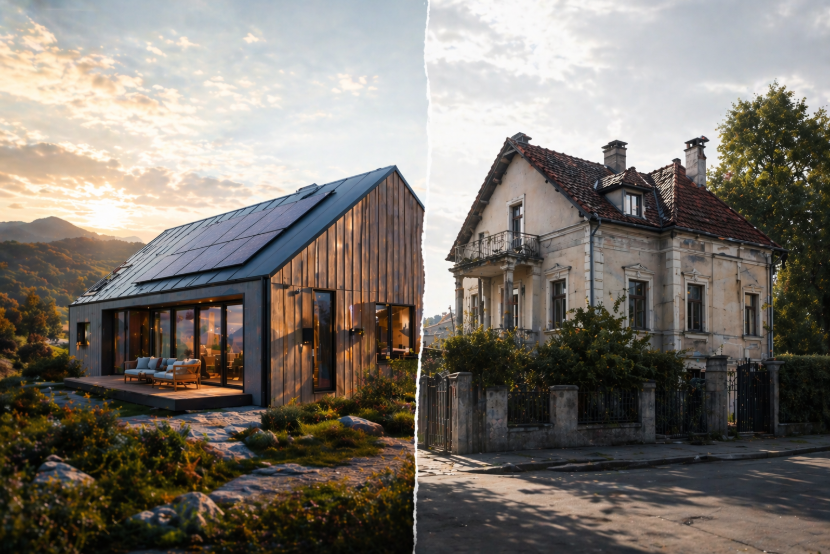
Table of Contents
The question is no longer just where to live in Europe. It is how much of your financial freedom you are willing to trade for a home.
As housing costs continue to rise across Europe and mortgage conditions remain uncertain, more buyers are asking a practical question: Does taking on a €300K to €400K mortgage still make sense in 2026? Or is there a smarter, more flexible alternative?
That is where the conversation around modular home vs traditional house cost becomes more relevant than ever. It is not just about the initial price. It is about land, financing, speed, long-term costs, and the way your home shapes your life.
Why Traditional Housing Is Becoming Increasingly Unaffordable
Across Europe, buying a traditional home has become significantly more expensive. According to Eurostat’s housing price data, house prices in the EU continued to rise in late 2025, while rents also kept climbing. That pressure is felt not only by first-time buyers, but also by households trying to move, downsize, or secure a more stable long-term home.
The European housing crisis has now become a policy priority. The European Commission’s Affordable Housing Plan is designed to increase supply, mobilize investment, and simplify parts of the housing and construction process across the EU. The European Parliament housing crisis resolution also highlights affordability as a major issue, noting the pressure that rising construction and housing costs have placed on citizens across member states.
For buyers, this creates a compounding effect. Higher purchase prices mean larger loans. Larger loans mean longer repayment periods. And longer repayment periods mean committing more of your future income to a single asset.
That is why comparing modular home vs traditional house cost is no longer just a financial exercise. It is a strategic lifestyle decision.
What You Get With a €99K Modular Home
Now let’s look at the alternative.
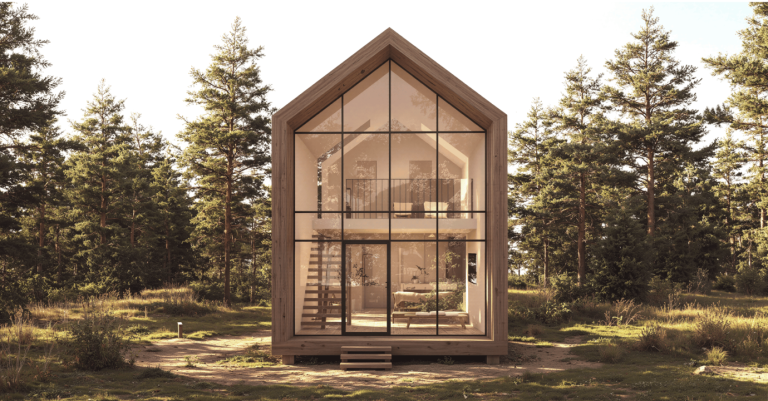
A modern modular home offers a very different route to homeownership. Instead of building everything on-site over many months, much of the structure is manufactured in a controlled factory environment and then delivered for installation on the plot. That shift in process is one reason modular construction is attracting so much attention in Europe right now, especially in markets facing supply shortages and cost pressure.
In practical terms, this can mean getting a design-led, energy-efficient home for far less than the cost of many traditional houses. But it is important to be clear: the advertised base price of a modular home is not always the total project cost.
Depending on the supplier and market, modular pricing in Europe can vary widely based on size, finishes, transport, installation, and local compliance requirements. If you want a deeper breakdown, see our cost of modular homes in Europe guide.
What usually makes modular housing attractive is not just price, but structure. The process tends to feel more controlled, the timeline is often shorter, and the budget is usually easier to understand from the beginning.
Modular Home vs Traditional House Cost: A Real Comparison
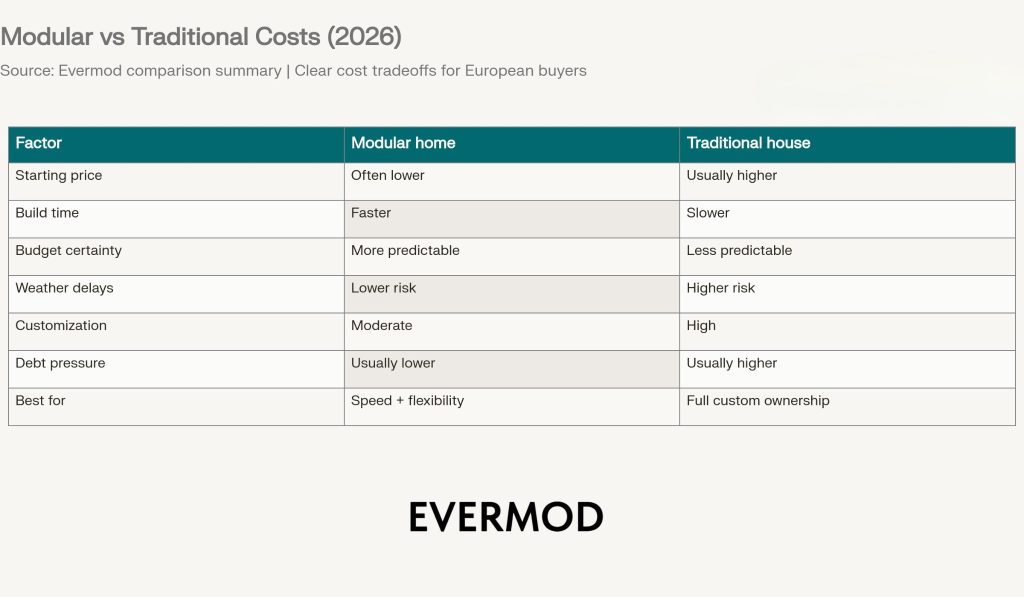
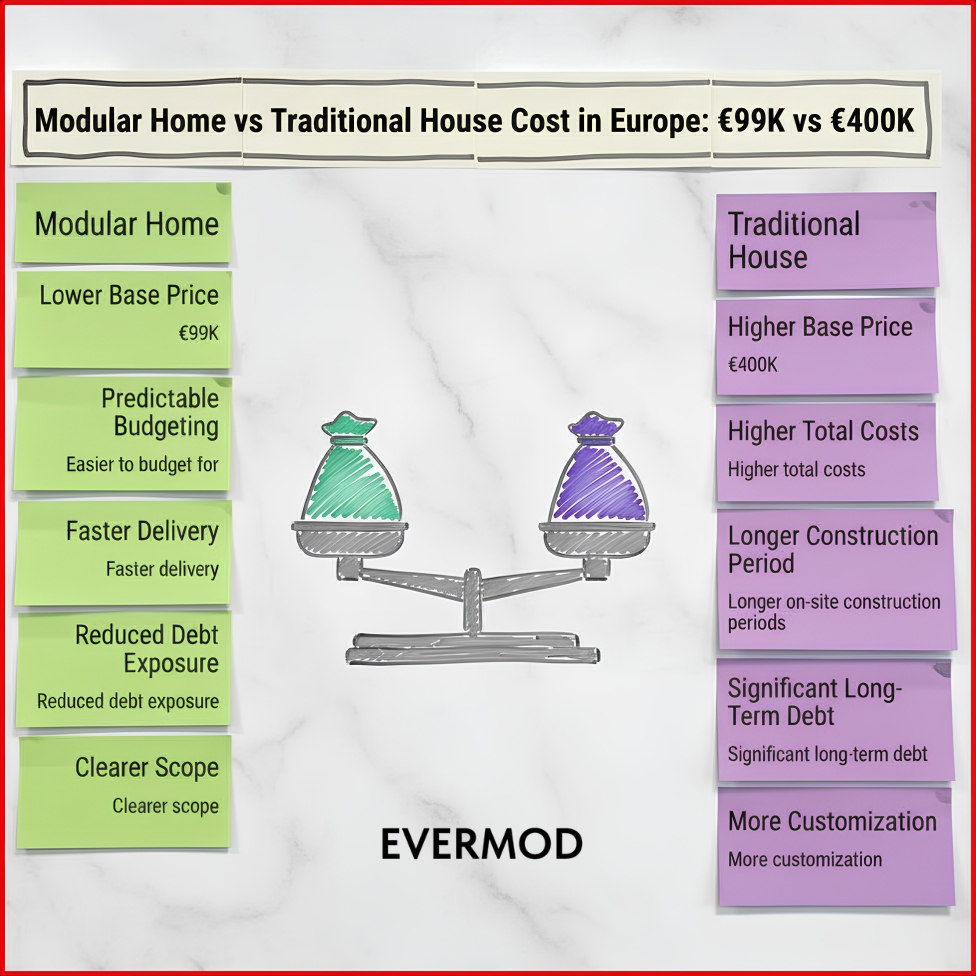
When comparing modular home vs traditional house cost, the most important difference is not only the starting price. It is the full financial structure behind the purchase.
Traditional homes often come with higher total costs because they rely on long on-site construction periods, larger labor inputs, and more exposure to delays. Those delays can come from weather, contractor availability, price changes in materials, or planning complexity.
A modular home, by contrast, is usually designed to reduce that uncertainty by shifting much of the work into a factory environment. In Europe, recent pricing overviews from Hanse Haus on prefabricated house prices and BIOBUILDS on modular home costs in 2026 show how widely prices can vary depending on specification, but they also reinforce one key point: modular builds tend to be easier to budget for than traditional on-site construction.
The result is a different kind of buying experience. Modular homes usually offer more predictable pricing, faster delivery, and a clearer scope. Traditional homes often offer more customization, but that freedom usually comes with more time, more coordination, and more room for overruns.
This is why the modular home vs traditional house cost comparison is becoming more relevant for first-time buyers, investors, and anyone trying to avoid excessive long-term debt.
Life With a Mortgage vs Life Without One
A €400K mortgage is not just a financial commitment. It is a lifestyle framework.
Monthly payments can affect career choices, mobility, savings goals, and even your willingness to take risks in other parts of life. The ECB Economic Bulletin and recent ECB monetary policy decisions continue to show how borrowing conditions and interest-rate dynamics across the euro area directly influence the affordability of home financing.
A lower-cost modular home can change that equation. For some buyers, it creates the possibility of reducing debt exposure, financing only part of the project, or avoiding a large long-term mortgage altogether.
That is one of the most overlooked dimensions of the modular home vs traditional house cost debate. It is not only about what you pay. It is about what your payment structure allows you to do with the rest of your life.
The Catch: What Buyers Need to Consider
No housing solution is perfect, and modular homes are no exception.
Land must still be secured. Local zoning rules still apply. Permits are still required in most cases. Those realities can affect both the cost and the timeline of a modular project, especially in markets with stricter planning frameworks.
However, these challenges are not unique to modular construction. Traditional builds face the same regulatory environment, often with more on-site uncertainty and a longer exposure to delays.
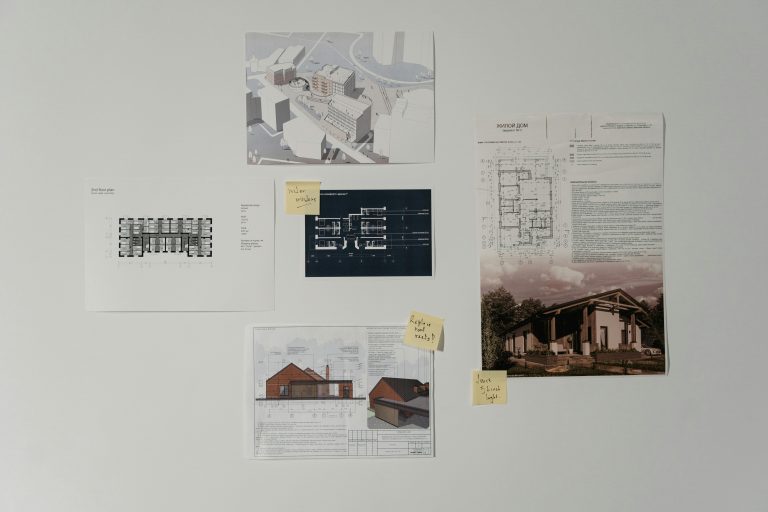
A realistic budget should account for the full project, not just the house itself. That means looking at the land, the foundation, transport and installation, permits, utility connections, and the cost of any upgrades or furnishing.
Once those elements are visible, the comparison becomes far more honest and useful.
Who This Option Makes the Most Sense For
While modular living is not the right fit for everyone, it is especially attractive for a growing group of buyers.
First-time buyers who are priced out of traditional housing often see modular homes as a practical entry point. Investors value the faster deployment and clearer cost structure. Remote workers and digital nomads appreciate the flexibility. Downsizers, meanwhile, are increasingly questioning whether they really need to carry a large mortgage for space they do not use.
You can also explore how this shift affects broader living choices in our article on modular home vs city apartment.
Is Modular Home Worth It in 2026?
So, is a €99K modular home a better choice than a €400K traditional house financed through a long-term mortgage?
The honest answer is: it depends on your priorities.
If long-term stability in one location, a more conventional ownership model, and a fully custom build are your top priorities, a traditional home may still be the better fit. But if you value flexibility, speed, cost control, and lower exposure to long-term debt, then the case for modular living becomes much stronger.
In a market defined by rising costs and affordability pressure, the modular home vs traditional house cost question is no longer just a comparison. It reflects a broader shift in how people define value, security, and home in Europe.
Explore Your Options
Choosing the right housing path depends on your budget, your land situation, and your long-term goals.
If you are considering modular living and want to understand how it could work for your specific case, Evermod offers tailored guidance based on your needs.
You can start by reading our guides to exploring the best countries to build a modular house in Europe in 2026 or learning more about the hidden cost of waiting to build.
FAQ
- Is a modular home always cheaper than a traditional house?
Not always. The base home price is often lower, but the final total depends on land, permits, foundations, transport, utility connections, and local requirements. Modular pricing in Europe can vary significantly depending on the project scope.
- What is the biggest advantage of a modular home?
For many buyers, it is predictability. Modular homes usually offer clearer timelines, tighter factory-controlled processes, and fewer unknowns than traditional on-site construction.
- Can I finance a modular home like a regular house?
In many cases, yes, but the answer depends on the lender, the country, and whether the home is classified as permanent real estate. Financing rules and mortgage treatment can vary across Europe.
- What should I compare before making a decision?
You should compare total project cost, land, permits, site preparation, financing, build time, and long-term operating costs before deciding between a modular and traditional home.