Wood Cities & Mass Timber: The Next Big Move in European Urbanism
Across Europe, the cities of tomorrow are being built from one of humanity’s oldest materials, which is wood. What began as a sustainability experiment has evolved into a full-fledged architectural revolution. From Stockholm to Vienna, urban developers and architects are embracing mass timber as a climate-friendly, cost-effective, and visually stunning alternative to concrete and steel. These emerging “wood cities” represent not just a change in construction material, but a transformation in how we imagine urban life, natural, renewable, and harmonious with the environment.
A Shift in Urban Thinking
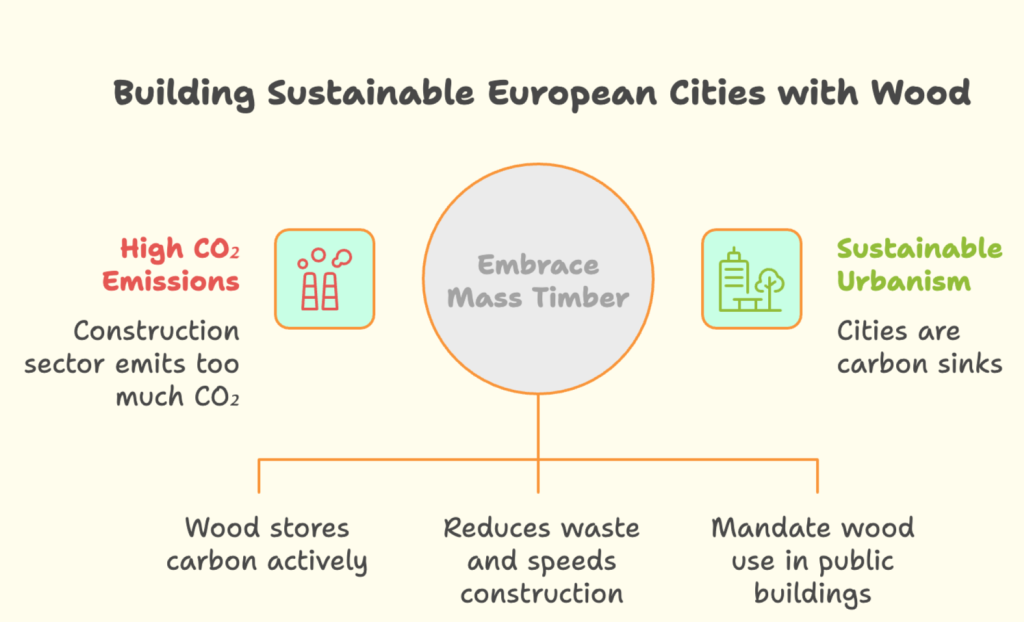
Concrete and steel have long defined Europe’s cityscapes. But with the construction sector responsible for nearly 40% of Europe’s total CO₂ emissions, it’s clear that traditional materials can no longer support the continent’s climate goals. Mass timber, primarily cross-laminated timber (CLT) and glulam, is stepping forward as a solution that is both strong and sustainable.
Wood is the only major building material that is renewable and actively stores carbon. Each cubic meter of wood can hold roughly one ton of CO₂, meaning that when used in construction, these emissions are locked away for decades. Beyond environmental performance, mass timber also enables a warmer, more human aesthetic. Cities are beginning to rediscover the psychological and health benefits of natural materials in built environments, a reconnection with nature that’s long overdue in the modern urban world.
The Rise of Europe’s Wood Cities
Northern and Central Europe are leading the timber renaissance. Sweden, Austria, Norway, and Germany have become living laboratories for large-scale wooden architecture. In Sweden, the Sara Cultural Centre in Skellefteå is one of the tallest timber buildings in the world, proving that wood can compete with steel in both scale and durability. In Austria, Vienna’s HoHo Tower demonstrates how hybrid timber construction can reduce a building’s carbon footprint by up to 80% while maintaining structural excellence.
Meanwhile, in France, national policy mandates that 50% of public buildings use wood or other bio-based materials by 2030, a bold step that sets a precedent across the EU. The Netherlands is following suit, with Amsterdam aiming to have 20% of new housing built from timber by 2025. These policies show that “wood cities” are no longer conceptual experiments; they are a growing urban reality. This shift isn’t only environmental. It’s cultural. As Europe’s population grows and sustainability becomes a moral and economic imperative, timber architecture is redefining what modern European cities look like, lighter, cleaner, and naturally beautiful.
Why Mass Timber Works
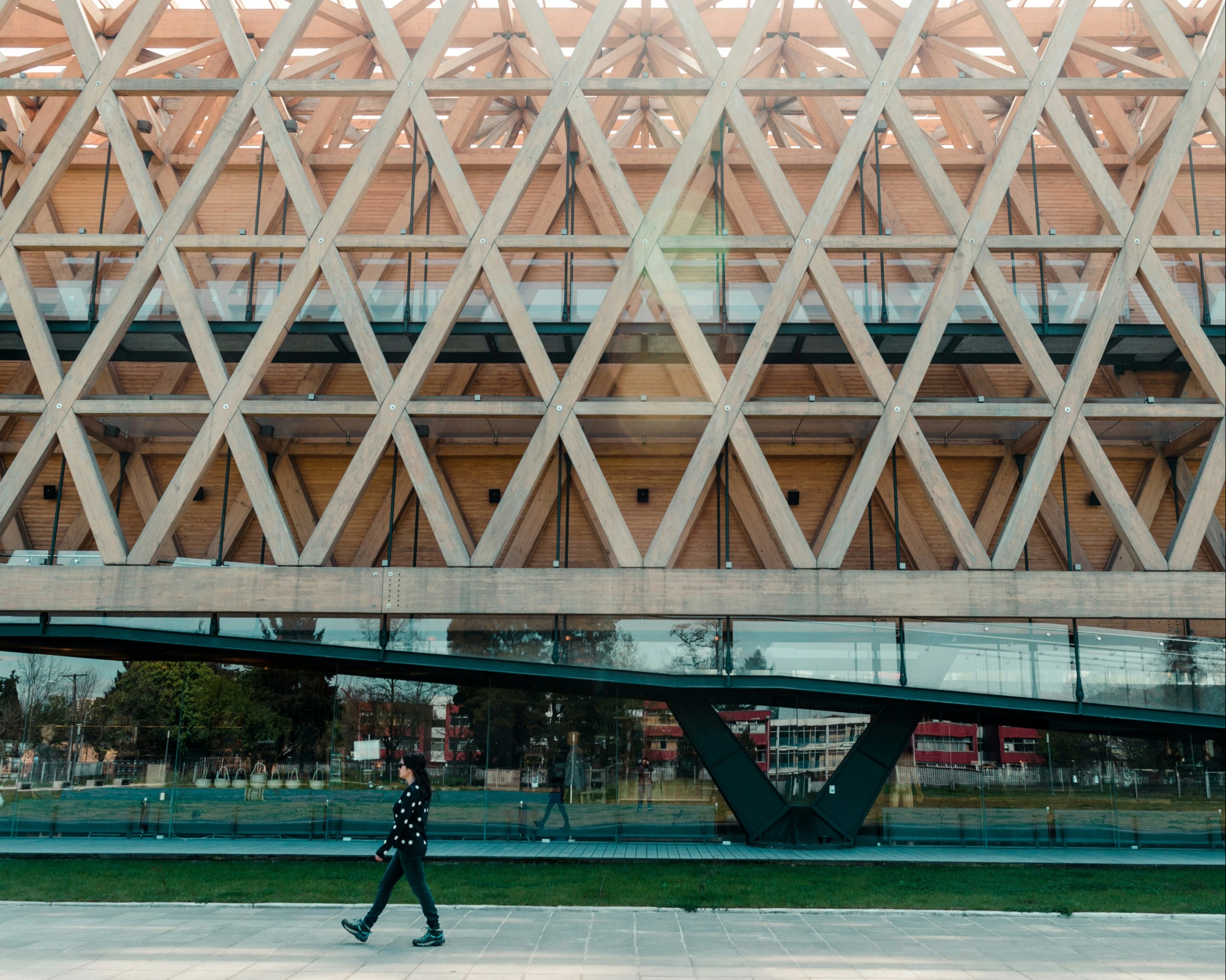
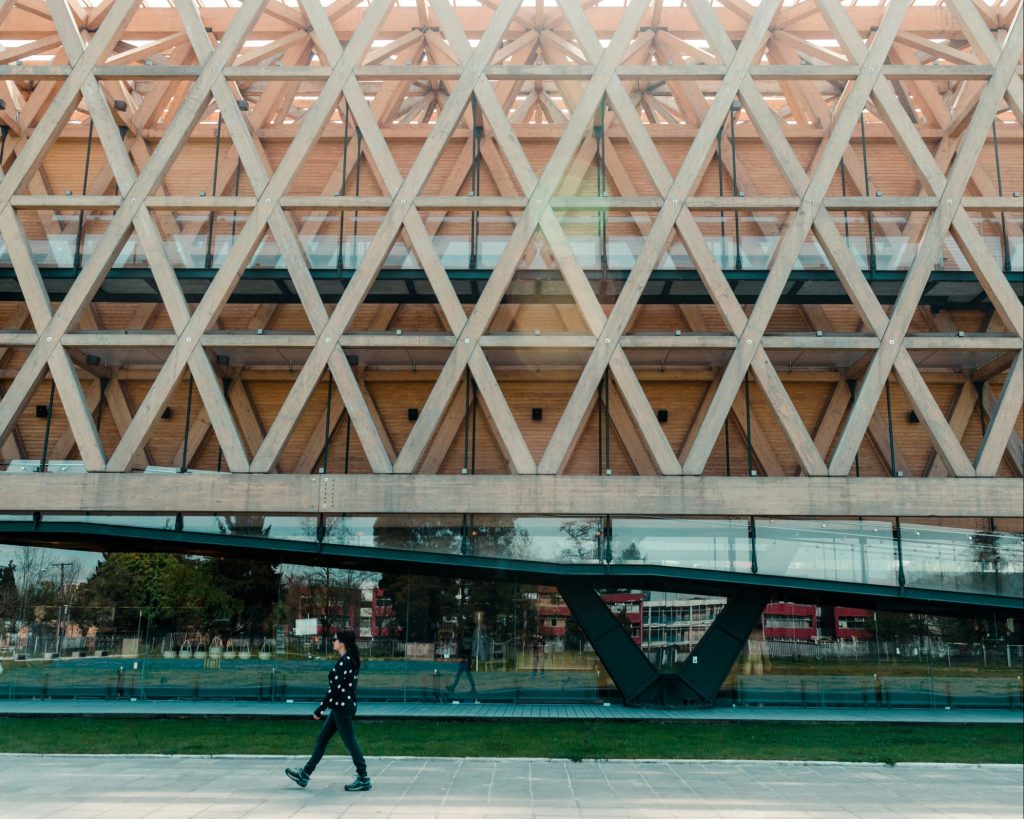
Mass timber technology combines traditional craftsmanship with advanced engineering. Cross-laminated timber (CLT) panels are made by gluing layers of wood at right angles, creating a material that is both strong and dimensionally stable. This allows timber buildings to reach impressive heights while remaining lightweight and energy-efficient.
Because most of the fabrication happens off-site, the construction process becomes cleaner, faster, and less disruptive to urban life. Prefabrication also drastically reduces waste, a perfect match for Europe’s circular economy goals. Also, you can learn more about sustainable prefab construction in our article How Modular Homes Reduce Construction Waste in Europe.
Timber also performs remarkably well in terms of fire safety. Contrary to common misconceptions, solid mass timber chars on the outside when exposed to fire, forming a protective layer that shields the structural core. This makes it more stable than unprotected steel under similar conditions, a crucial factor for safety-conscious European regulations.
The Challenge of Scaling Wood Urbanism
Despite its promise, scaling timber urbanism across Europe poses challenges. Building codes in some countries remain outdated, and supply chain limitations can increase costs in regions without established forestry infrastructure. Sustainable sourcing is also critical; as demand grows, Europe must ensure its forests are managed responsibly to avoid overharvesting.
Organizations such as FSC Europe and PEFC are playing a vital role in ensuring transparency and traceability. Still, long-term policy alignment between countries will be key to sustaining the momentum of the wood revolution.
A Natural Partner: Modular & Prefab Construction
Where timber really shines is in synergy with modular and prefab building systems. Both approaches share the same DNA: precision, speed, and sustainability. Prefabricated timber modules can be produced in controlled environments, reducing material waste and allowing for faster, higher-quality construction.
For companies like Evermod, this alignment is more than strategic; it’s visionary. Our turn-key modular homes use sustainably sourced materials to create efficient, modern living spaces that adapt to European climates and urban needs. Mass timber enhances not only the sustainability of these homes but also their comfort and aesthetic appeal. The combination of prefab efficiency and renewable construction materials represents the future of European housing: scalable, affordable, and sustainable.
Sweden’s Small Wonder: The Attefall House
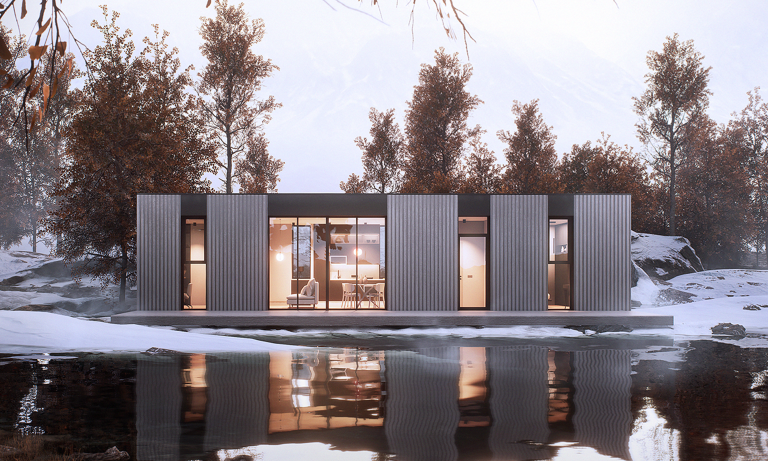
Zooming in on Sweden gives us a glimpse into how this philosophy already works in practice. The Attefall House(which we also manufacture), or Attefallshus, has become a Swedish icon of efficient, sustainable living. This 23 m² modular home requires no building permit in Sweden, a small but powerful policy change that unlocked a nationwide movement toward compact, sustainable housing.
Evermod’s Attefall Unit captures that spirit beautifully. Designed to be transported on a single truck, it combines practicality and Scandinavian elegance. Despite its compact footprint, it includes two full-sized bedrooms, a generous kitchen-living area, and superior insulation that meets the standards of colder northern climates.
This turn-key home demonstrates that sustainability doesn’t have to mean sacrifice. It’s ideal for a guest house, a digital nomad retreat, or even an Airbnb rental, offering flexibility, beauty, and energy efficiency in one minimalist package. The Attefall house proves that small can be sustainable, stylish, and profitable all at once, an ethos that lies at the heart of Europe’s modular and timber revolution.
The Timber Metropolis: A Glimpse into the Future
Imagine walking through a European city in 2040. The air feels cleaner, façades are alive with greenery and wooden warmth, and streets are lined with quiet, energy-efficient buildings. Modular apartments stack elegantly like puzzle pieces, built almost entirely from renewable materials. This isn’t science fiction; it’s already happening in cities like Oslo, Amsterdam, and Vienna.
In these “wood cities,” the distinction between nature and architecture begins to blur. Urban spaces are becoming carbon sinks rather than sources, with each building actively contributing to the planet’s health. Wood, once seen as old-fashioned, has reemerged as a material of innovation, embodying the balance between technological progress and ecological responsibility.
Conclusion: Building Tomorrow’s Cities from Nature
The rise of wood cities marks a turning point in European urbanism. It’s not simply a new building trend, but a new mindset, one where sustainability, efficiency, and design excellence coexist. From the sweeping timber towers of Vienna to compact modular homes like the Attefall, Europe is proving that construction can be both beautiful and responsible.
As Evermod continues to champion modular design and renewable materials, we believe the path forward is clear: the future of construction is circular, modular, and rooted in nature. Whether through large-scale timber architecture or efficient prefab homes, Europe’s next great urban movement is already taking shape, one wooden beam at a time. Why don’t you join the movement and make a difference as well?