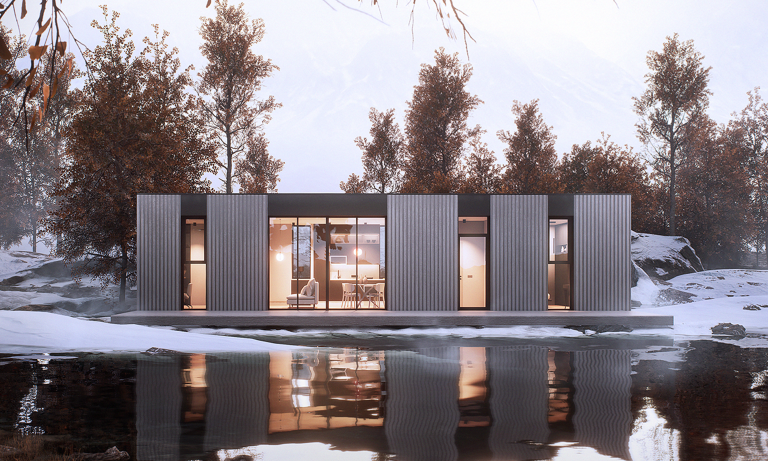
Modular Home Investment in Europe: Real Estate Strategy for 2026

Table of Contents
Across Europe, property investors are increasingly looking beyond traditional apartments and large development projects. Rising housing prices, changing travel habits, and new lifestyle patterns are pushing buyers to reconsider how real estate can generate income. One idea that has started to attract serious attention is modular home investment, and fairly so.
Rather than focusing only on traditional property purchases in crowded cities, some investors are exploring modular homes as flexible assets that can serve multiple purposes. A modular home might function as a vacation rental, a second home that generates seasonal income, or even a small hospitality business. As interest in alternative property strategies grows, the concept of prefab home investment around Europe is gradually moving from niche discussion to mainstream real estate conversation.
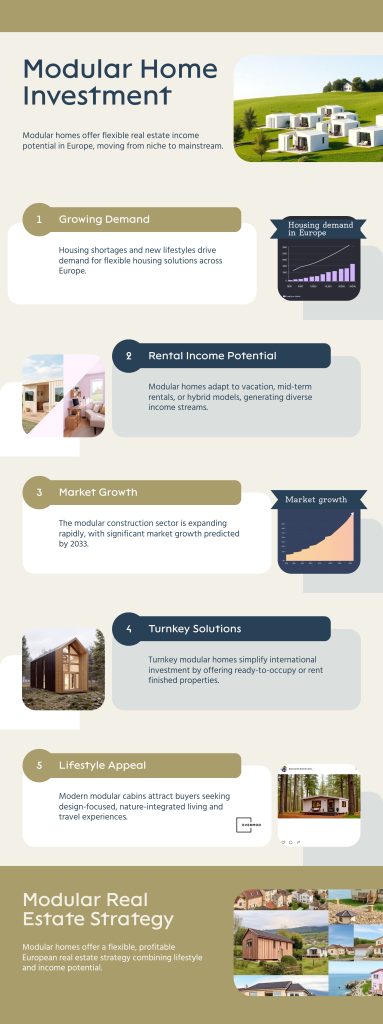
At the same time, broader market trends support this shift. The modular construction sector across Europe is expanding rapidly, with industry forecasts estimating the market could approach $90 billion by 2033, driven by housing demand, urban growth, and new construction technologies.
These conditions create a fascinating question for investors: can modular housing become a reliable and profitable real estate strategy?
Why Modular Home Investment Is Attracting Property Buyers
A modular home investment represents a slightly different approach to property ownership. Instead of buying a conventional apartment in a dense urban area, investors are considering smaller, flexible housing units that can be placed in areas where accommodation demand is growing.
One of the biggest drivers of this trend is the transformation in how people live and travel. Remote work has enabled professionals to spend weeks or months outside major cities, while tourism patterns increasingly favor unique stays such as cabins, countryside homes, and design-focused retreats.
This change has created new modular real estate opportunities. Investors no longer need to focus exclusively on large developments to participate in the property market. In some cases, a single small property placed in the right location can become a stable income-generating asset.
Another factor driving interest is the growing gap between housing demand and supply across many European regions. Housing shortages remain significant in several countries, prompting developers and policymakers to consider modular building as a means of expanding housing supply.
As a result, modular housing is no longer viewed solely as an architectural concept but increasingly as a potential investment strategy in modular properties.
How Modular Homes Can Generate Rental Income
One of the most compelling aspects of modular housing is its potential to generate rental income. The flexibility of these properties allows them to adapt to various rental models, depending on location and market demand.
In tourism-driven regions, modular homes often function as short-term vacation rentals. Travelers are increasingly seeking independent spaces that offer privacy and unique design rather than standard hotel rooms. Small homes surrounded by nature, lakes, mountains, or coastal landscapes tend to perform particularly well on platforms like Airbnb and Booking.
Another emerging segment is mid-term rentals for remote workers. Professionals who work online often prefer quiet locations with access to nature while still maintaining a comfortable living environment. Modular houses offer a practical solution for this growing demographic.
Some owners combine both approaches. They use the property themselves during part of the year and rent it to travelers during peak seasons. This hybrid lifestyle model allows a property to remain personally useful while still generating revenue.
For those exploring this concept further, our article, “Your Backyard, Your Business: How a Single Modular Home Can Become a Second Income in Europe,” explains how unused land can sometimes be transformed into a small hospitality opportunity.
Prefab Home Investment Europe: Why the Market Is Growing
The idea of investing in prefabricated homes in Europe is closely tied to broader changes in the European housing landscape. Tourism, mobility, and digital work patterns are reshaping how people use residential space.
European tourism alone has reached remarkable levels in recent years. According to data cited by Evermod, more than 3 billion nights were spent in tourist accommodation across Europe in 2024, with a growing share occurring in short-term rentals rather than traditional hotels.
This shift creates opportunities for property investors seeking to participate in the accommodation market without constructing large resorts or apartment complexes.
In many destinations, travelers are actively seeking unique accommodations: cabins in forests, minimalist houses near beaches, or modern-design homes in rural landscapes. These experiences often command higher nightly rates than standard urban apartments.
As a result, modular housing is increasingly appearing in small tourism developments, boutique accommodations, and independent rental projects across Europe. For investors willing to think creatively about location and design, these developments represent growing opportunities for prefab housing investment.
The Appeal of Turnkey Modular Homes in Europe for Investors
One aspect that particularly interests international buyers is the turn-key modular homes market in Europe. In a traditional property development, investors often face multiple stages: design planning, construction management, contractor coordination, and interior completion.
Turn-key modular homes simplify the process by delivering a finished property ready to occupy or rent shortly after installation. If you have been following us along, you probably know this already!
For many investors, this reduces the complexity of launching a property project abroad. Instead of managing a lengthy overseas development process, buyers can focus on selecting the right location and preparing the property for rental or personal use.
This is especially relevant for buyers who view property ownership as part of a broader lifestyle strategy. Many modern investors are not full-time developers but professionals looking for flexible assets that can complement travel, remote work, or semi-retirement plans.
Turnkey modular homes, therefore, fit naturally into a growing category of modular property investment models, where simplicity and flexibility matter as much as financial return.
Modern Modular Cabins as a Lifestyle Investment
Another growing niche is the investment in modern modular cabins. These properties combine contemporary architecture with nature-focused experiences, making them particularly attractive to tourists.
Over the past decade, architectural trends have shifted toward minimalist aesthetics, large windows, and compact but highly functional interiors. Cabin-style modular homes often embody this design philosophy, creating spaces that feel both modern and connected to the surrounding landscape.
Travel platforms have amplified this trend. Photogenic cabins in forests or near lakes frequently perform well on social media, which in turn drives booking demand. For investors, this creates an interesting intersection between design and hospitality.
In destinations where outdoor tourism is popular, a small cluster of modular cabins can sometimes function as a boutique accommodation concept. We explore this idea in the article How to Boost Your Campsite Business with Turn‑Key Modular Homes, which explains how campsites and small hospitality businesses can expand accommodation capacity with modular units.
The key takeaway is that these properties are not only places to stay but also part of a larger travel experience.
What Investors Should Consider Before Buying
Despite the opportunities, a modular home investment still requires careful planning. Like any real estate purchase, the long-term success of a property depends primarily on location and demand.
Investors should evaluate whether a particular region attracts tourists, remote workers, or seasonal residents. Local regulations also play an important role, as zoning rules and rental restrictions vary significantly across European countries.
Infrastructure access is another important factor. Even small rental properties benefit from reliable roads, utilities, and internet connectivity.
Market stability should also be considered. Some regions experience rapid tourism growth but also high volatility. A balanced investment strategy often combines lifestyle appeal with economic stability.
We also discuss how short-term rentals can become a strong opportunity when these factors align in our article Modular Homes and Airbnb: A Smart Investment for 2025 and beyond, which explores how modular housing can fit into the evolving vacation-rental market.
Ultimately, the success of a modular property depends less on the building itself and more on the surrounding market environment.
Is Modular Home Investment the Right Strategy for You?
A modular home investment is not necessarily a replacement for traditional real estate, but it can represent a complementary strategy.
For some buyers, modular homes serve as second homes that generate occasional rental income. For others, they become small hospitality businesses or part of a larger tourism project. For some investors, modular housing offers an entry point to property ownership in markets where conventional real estate is increasingly expensive.
What makes this strategy interesting is its flexibility. A modular home can function as a private retreat, a rental property, or even a hybrid of both, depending on the owner’s lifestyle and long-term plans.
As Europe continues to face housing shortages and evolving travel habits, modular housing is likely to remain part of the broader real estate conversation. Market data already suggests strong growth in the sector, with modular construction expanding steadily across the continent to meet housing demand.
For investors willing to explore new approaches, modular homes may represent a modern entry point into real estate – one that combines lifestyle flexibility with the potential for long-term value.