
The Cost of Modular Homes in Europe (2026 Guide): What Buyers Should Actually Expect

Table of Contents
If you’ve recently started researching modular housing, chances are you’ve asked the same question that nearly everyone asks at the beginning of the journey: What is the cost of modular homes in Europe?
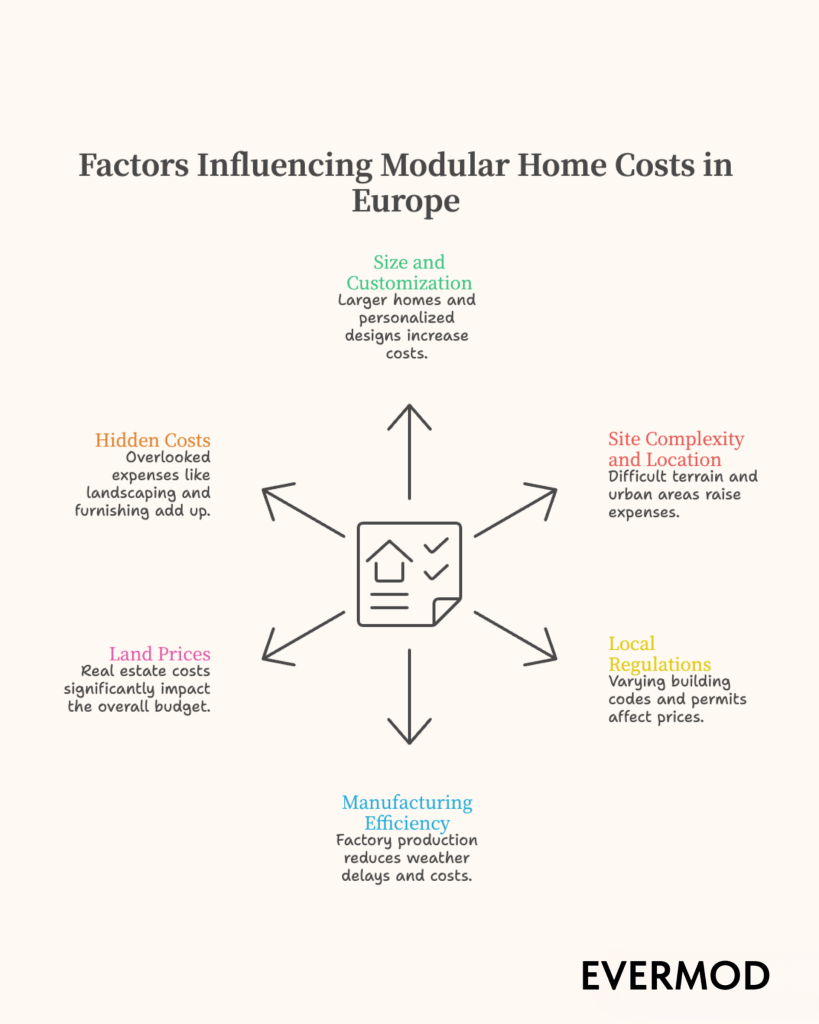
At first glance, it sounds like something that should have a simple answer. After all, a house is a house, right? In reality, the cost of modular homes in Europe depends on several interconnected factors. The size of the home, the level of customization, the complexity and location of the site, and even local regulations can all influence the final number.
At Evermod, this is almost always the first question we hear. And honestly? We’re glad people ask. Transparency is the only way to start a building project. People across Europe are increasingly exploring alternatives to traditional construction; some are looking for a more efficient building process, others want energy-efficient homes, and many are simply searching for a clearer path toward homeownership. Understanding modular housing prices in Europe is the first step in evaluating whether modular construction might be the right solution.
The good news is that modular homes tend to offer greater transparency compared to traditional construction. Because most of the building process happens in a factory environment, pricing structures are often clearer, and timelines are more predictable. But to fully understand the cost of modular homes in Europe, it’s important to break the process down into its key components.
The Cost of Modular Homes in Europe: Typical Price per m²
When industry professionals discuss modular housing prices in Europe, they usually start with the price per square meter. This metric makes it easier to compare different projects and helps potential buyers understand approximate investment levels. Across Europe, modular homes generally fall within several broad price categories depending on design complexity, construction quality, and interior finishes.
Entry-level modular homes often begin around €1,200 to €1,800 per square meter, particularly for smaller homes with simpler layouts. Mid-range modular homes typically fall between €1,800 and €2,500 per square meter, offering improved materials, larger layouts, and more refined architectural details.
Premium modular homes, which may include custom architectural elements, higher-end materials, or luxury interiors, can range between €2,500 and €3,500 per square meter or more.
To illustrate this with a practical example, a modular home measuring approximately 90 square meters could start around €120,000 to €160,000 for the main structure, depending on specifications.
Thus:
- Entry-level: €1,200 – €1,800 / m2
- Mid-range: €1,800 – €2,500 / m2
- Premium: €2,500 – €3,500+ /m2
However, it’s important to remember that the final project price rarely includes only the structure itself. The complete project may also involve foundations, utility connections established, site preparation, and permits.
The real advantage? Your home is built indoors. While traditional builders are battling rain, mud, and freezing temperatures, our teams are working in a climate-controlled factory in Latvia. This eliminates the ‘weather-delay’ tax that usually inflates building costs. By working in a climate-controlled setting, we can plan material usage with surgical precision, passing those efficiencies directly to the buyer. As a result, the cost of modular homes in Europe can often be estimated with greater confidence compared to traditional on-site construction.
Why Modular Housing Prices in Europe Vary Between Countries
Europe is incredibly diverse when it comes to construction markets. Labor costs, environmental standards, taxation policies, and building regulations vary widely between countries, and these differences inevitably influence the bottom-line price of modular housing.
For example, Western European markets such as Germany, France, or the Netherlands tend to have higher construction costs due to labor expenses and strict building standards. In contrast, parts of Central and Eastern Europe may offer more competitive building environments.
Southern European countries sometimes present a different picture again, with moderate construction costs but varying permitting procedures depending on regional authorities.
These differences reflect broader construction trends across the continent. According to data published by Eurostat, the statistical office of the European Union, construction cost indices can vary significantly across member states due to factors such as wages, materials, and regulatory requirements.
Because of these variations, the total investment amount cannot always be discussed as a single universal number. Instead, it is more useful to think of modular construction as a flexible system that can adapt to different regional markets.
For buyers considering where to build, regulatory conditions can be just as important as construction costs. Our guide explores several European countries where modular construction fits particularly well within the regulatory framework.
Land Prices and Their Impact on the Cost of Modular Homes in Europe
While people often focus on the house itself, experienced developers know that land can sometimes represent the largest variable in the overall project budget.
Land prices across Europe differ dramatically depending on location, infrastructure, and zoning rules. A building plot near a major city or coastal destination can cost several times more than land in rural regions. Because of this, the cost of modular homes in Europe is often closely linked to land availability and regional real estate markets.
In urban areas, land scarcity can significantly increase the overall project cost even if the modular house itself remains relatively affordable. On the other hand, rural or emerging regions may offer far more accessible land prices, making modular living an attractive option for those seeking space, privacy, or proximity to nature.
Many future modular homeowners, therefore, begin their journey by researching land markets before choosing a house design. For those exploring this path, our guide highlights regions where land remains comparatively affordable across Europe. By combining accessible land with efficient modular construction, many buyers are able to significantly optimize the overall budget of their modular build.
What Actually Makes Up the Cost of Modular Homes in Europe?
A modular home project involves several layers of planning and execution. When professionals estimate the cost of modular homes in Europe, they usually look at the project as a combination of multiple components rather than a single price.
The modular unit itself is typically the largest portion of the budget. This includes the structural frame, insulation systems, windows, roofing, and many interior elements that are pre-assembled in the factory.
Because modular homes are manufactured indoors, builders can achieve higher levels of precision and quality control. Factory conditions also allow construction to continue regardless of weather, which helps keep timelines predictable. Beyond the structure itself, site preparation is another important element. Before the modular unit arrives, the land must be prepared and the foundation constructed. Foundations vary depending on soil conditions and engineering requirements.
Utility connections represent another component of the total investment required. Electricity, water supply, sewage systems, and internet infrastructure must be integrated into the property before the home becomes fully operational.
Permitting and regulatory processes can also influence project costs. In many European countries, construction projects require environmental checks, zoning approvals, and building permits. According to the World Bank’s Doing Business research, administrative procedures such as building permits can significantly influence project timelines and construction costs in different countries.
Finally, delivery and installation logistics must be considered. Transporting modular units from the factory to the building site requires careful planning, and cranes are often used to position modules during installation.
Hidden Costs Buyers Often Overlook
While the core price of a modular home usually includes the structure itself, foundations, utilities, and installation, many buyers are surprised to discover that several additional expenses appear once a project moves from planning to completion.
Land acquisition is typically the first major investment beyond the house itself. Depending on the region, the price of a building plot can sometimes equal, or even exceed, the price of the modular unit. This is particularly true in popular coastal regions or areas close to major cities, where land availability is limited.
Beyond purchasing the plot, practical site considerations begin to shape the overall budget. Access roads may need to be prepared, drainage systems installed, or utility infrastructure extended to reach the property. These logistical elements rarely appear in early price comparisons, yet they can meaningfully influence the total cost of building a modular house in Europe.
Once the home is installed, outdoor elements often become part of the project as well. Terraces, landscaping, garden design, and driveways all contribute to creating a complete living environment. While many prefab homes in Europe arrive with finished interiors, furnishing the space and adding personal design touches is usually the final step before the home is fully ready to live in.
Looking at the entire picture from land and infrastructure to finishing details gives buyers a much clearer understanding of the real investment behind modular housing projects in Europe.
Why Modular Construction Often Provides Better Cost Predictability
Anyone who has followed a traditional construction project knows that budgets can sometimes evolve in unexpected ways. Weather delays, material shortages, and contractor scheduling conflicts can all disrupt timelines and increase costs.
Modular construction addresses many of these challenges by shifting most of the building process into a controlled factory environment. Inside the factory, construction teams work with standardized processes, consistent supply chains, and stable working conditions. This allows manufacturers to manage production schedules more efficiently and reduce many of the variables that typically affect construction sites. For buyers evaluating the Cost of Modular Homes in Europe, this predictability can be one of the most valuable advantages of modular construction.
Evermod’s Approach to the Cost of Modular Homes in Europe
Different modular manufacturers operate with different production models. Some companies produce homes locally in multiple markets, which means pricing may vary depending on regional labor costs or supply chains. Evermod follows a centralized manufacturing approach instead. All homes are produced in a controlled factory environment in Latvia, where construction standards and production processes remain consistent across projects.
Because production happens in the same facility, the base manufacturing price of Evermod homes remains stable regardless of where the unit is delivered within Europe. Transport logistics, site preparation, and local regulatory requirements may vary depending on the destination country, but the underlying manufacturing cost does not change.
For many buyers exploring projects across different countries, this approach takes the guesswork out of the manufacturing side of the budget. It allows future homeowners to focus on choosing the right land, design, and installation strategy while maintaining clarity about the manufacturing component of the project.
Planning a Modular Home Project in Europe
Building a home is rarely just about construction. It is also about lifestyle, long-term planning, and choosing a place that fits the way you want to live. Across Europe, modular construction is becoming an increasingly attractive alternative to traditional building methods. Faster timelines, improved energy efficiency, and more predictable budgeting are encouraging more people to explore modular housing.
Understanding the true investment behind a modular project is therefore not only about numbers; it’s about seeing how all the pieces of the puzzle fit together.
From land selection and permitting to manufacturing and installation, each stage plays a role in shaping the final investment. For many future homeowners, modular construction offers something that traditional building often struggles to provide: clarity, efficiency, and flexibility. And as modular technology continues to evolve, the conversation around the cost of modular homes in Europe will likely become an even more important part of how people plan their homes across the continent.