Buy Land in Europe – Is 2026 the Right Time? A Strategic Outlook for Modular Home Buyers

Table of Contents
For many future homeowners, the question is no longer simply where to build, but when. Over the past few years, Europe’s property markets have experienced rapid growth, correction, and stabilization. Headlines have alternated between urgency and caution. Against this backdrop, a growing number of people are quietly asking: is this the right moment to buy land in Europe in 2026?
Land behaves differently from urban apartments or speculative investment properties. It moves more slowly, and its value is often tied to long-term structural factors rather than short-term hype. For those considering modular living, securing land is typically the first real step toward independence. The timing of that step deserves thoughtful consideration.
Unlike trend-driven property cycles, buying land is rarely impulsive. It reflects intention, about lifestyle, geography, and long-term planning.
What to Consider Before You Buy Land in Europe in 2026
To understand whether it makes sense to buy land in Europe in 2026, it helps to zoom out.
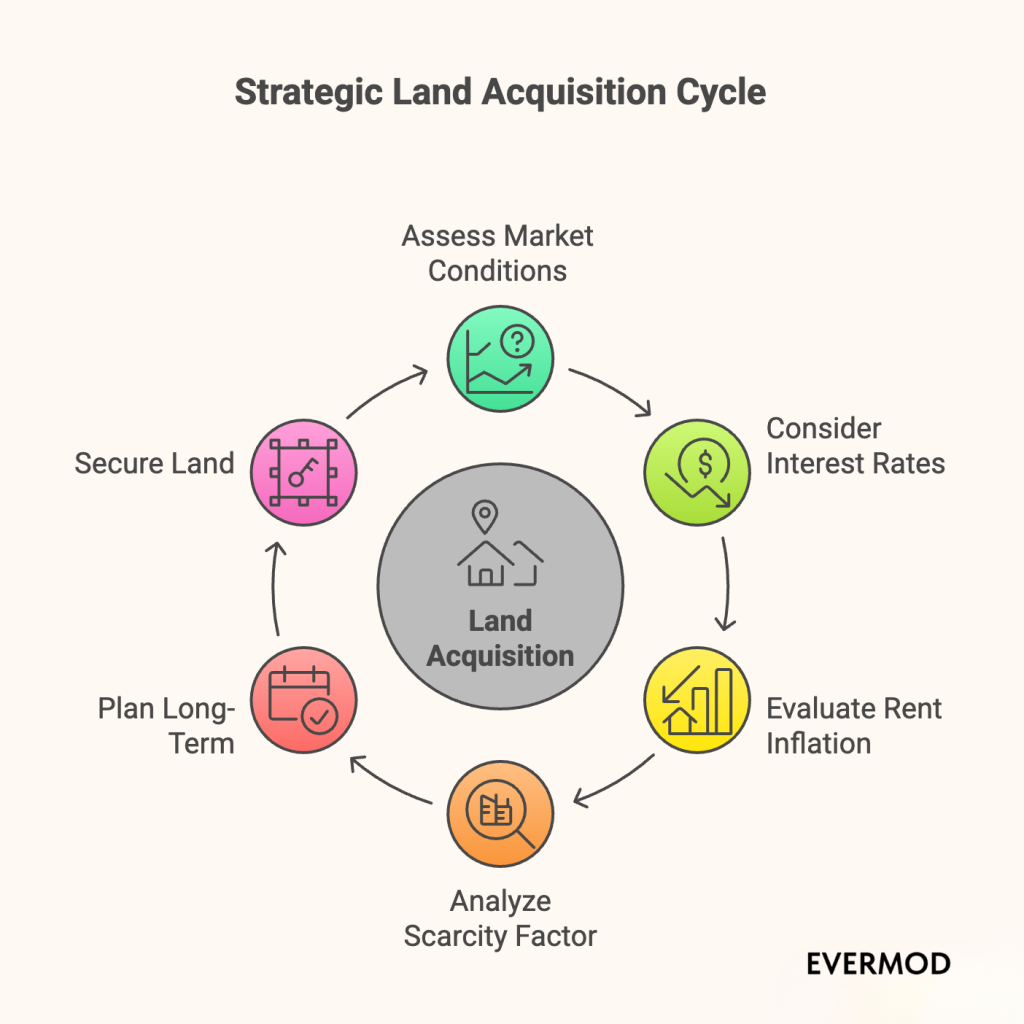
Across much of Europe, residential property markets have cooled after the intense post-pandemic surge. According to data from Eurostat, housing price growth has moderated in several EU countries compared to peak increases seen between 2021 and 2023. While urban centers remain expensive, many rural and secondary regions have experienced stabilization rather than continued acceleration.
This shift is significant. Stabilization creates space for strategic decision-making. When markets cool, buyers regain negotiating power. Sellers become more realistic. Emotional urgency gives way to analysis.
For buyers planning to build within the next one to three years, this more balanced environment may offer an opportunity. Choosing to buy land in Europe in 2026 could mean entering at a point where prices are not rapidly climbing, yet long-term structural demand remains intact.
Interest rates also shape the conversation. After aggressive increases across the Eurozone, the European Central Bank has signaled a more measured approach as inflation pressures ease. While borrowing costs remain higher than in the ultra-low-rate years, they are no longer rising at the same pace. Importantly, land purchases are often less leveraged than city apartments, meaning buyers may face less exposure to rate volatility. At the same time, another force continues to influence decisions: rent inflation.
In major European cities, rents remain high and, in many cases, continue to rise. Urban tenants are increasingly questioning whether long-term renting offers meaningful stability. This shift is explored further in our recent article on the growing movement away from city apartments toward modular living.
The comparison is no longer purely financial. It is emotional and practical. Space, autonomy, and energy efficiency carry new weight. For some, the decision to buy land in Europe in 2026 is not about market timing alone. It is about reclaiming control over living conditions.
The Scarcity Factor: Why Waiting May Not Always Reduce Risk
Land often appears abundant on a map, but buildable land is a different story.
Zoning regulations across Europe are tightening, particularly around environmentally sensitive areas and expanding urban regions. Infrastructure planning, protected landscapes, and local development restrictions quietly reduce the number of plots available for residential construction.
While rural Eastern and Southern Europe still offer affordable options, as discussed in our detailed guide to the most affordable countries for land purchases in 2026, availability varies significantly by region.
The key distinction here is that our previous guide focuses on where land is cheapest. The current question is different. It asks whether the broader economic moment makes sense to buy land in Europe in 2026 at all.
Scarcity operates gradually. It does not always show up in dramatic price spikes. Instead, it appears as fewer quality plots coming to market, longer search times, or more complex permitting processes. Waiting several years may not produce substantial price reductions, but it could reduce flexibility in choosing a location.
For long-term planners, flexibility is often more valuable than marginal short-term savings.
Thinking Long-Term in a More Balanced Market
When you step back and look at the bigger picture, land has always been a quiet, steady asset in politically stable European countries. It rarely creates dramatic headlines, but over time it tends to appreciate, especially in areas that benefit from new infrastructure, improved transport links, or shifting population trends.
In recent years, remote work has reshaped how people choose where to live. Smaller towns and semi-rural areas are no longer seen as compromises. With strong internet connections and better mobility, being well-connected now matters more than being physically close to a city center. Lifestyle flexibility has become a real economic factor.
If you’re thinking about whether to buy land in Europe in 2026, it helps to separate short-term speculation from long-term strategy. Speculators look for rapid price jumps and quick exits. Strategic buyers think differently. They focus on securing a good location, controlling costs, and planning for how they actually want to live over the next five or ten years.
This is where modular construction fits naturally into the equation. Unlike traditional builds, modular homes offer clearer budgeting and shorter timelines, which reduces uncertainty. Securing land first gives you breathing room. You can design and build when it aligns with your finances and personal readiness, rather than reacting to market pressure.
There is also the quieter influence of inflation. Even when land prices stabilize, the costs of materials, labor, and infrastructure rarely decline significantly. Waiting indefinitely does not automatically translate into lower overall project costs. In some cases, it simply postpones progress while other expenses gradually rise.
Seen from this perspective, choosing to buy land in Europe in 2026 may not be about urgency at all. It may be about balance. Prices are no longer surging the way they once were. Financing conditions are more transparent than during periods of rapid rate hikes. And the broader movement toward decentralized, flexible living continues to gain momentum. Sometimes the right time is not when everything feels perfect, but when the environment feels steady enough to plan with confidence.
Who Should Buy Land in Europe in 2026?
Not everyone benefits equally from acting now.
Individuals with long-term horizons tend to be best positioned. Remote professionals planning geographic flexibility, families seeking stable housing outside high-cost urban cores, and investors exploring modular rental concepts often approach land with a multi-year outlook.
For these groups, short-term price fluctuations become less relevant. If the intention is to build and live on the land for five years or more, market timing plays a smaller role than location quality and planning readiness.
On the other hand, buyers heavily dependent on short-term leverage or those uncertain about their future country of residence may need more clarity before committing. Land should not be purchased as a reaction to anxiety. It should reflect conviction.
A Balanced Moment, Not a Perfect One
No year offers perfect certainty. Markets fluctuate. Policies evolve. Economic cycles continue. The goal is not to predict with absolute precision but to assess relative positioning.
Current conditions suggest that to buy land in Europe in 2026 is neither a speculative rush nor a distressed gamble. It sits within a period of relative equilibrium. Urban housing pressures remain high. Rural and secondary markets show stabilization. Interest rates are no longer accelerating aggressively. Demand for flexible living continues.
For modular home buyers, this equilibrium may be particularly relevant. Modular construction reduces exposure to many of the risks that traditionally made land acquisition intimidating. When combined with careful regional research and long-term thinking, 2026 may represent a strategically sound entry point. Ultimately, the decision is personal. It depends on readiness, financial structure, and clarity of vision. Markets can guide analysis, but they do not define individual timelines.
If you are already planning to build within the next few years, waiting may not significantly improve conditions. It may simply postpone progress. And for many aspiring homeowners, momentum matters as much as timing.
Choosing to buy land in Europe in 2026 is not about chasing trends. It is about aligning opportunity with preparedness. When those two meet, the calendar becomes less intimidating and more practical.